


The Ultimate Guide to Facebook Marketplace Scams: Signs, Safety Tips, and How to Protect Yourself
With over a billion people logging on to buy and sell every month, Facebook Marketplace is basically the world’s biggest digital garage sale. But a crowd that massive also brings out the worst kind of people. The platform is crawling with scammers looking for an easy payday.
Whether you are just trying to get rid of an old couch or sourcing cheap inventory for your online store, you are going to run into them. You need to know exactly who you are dealing with.
Let’s break down the core tenets of navigating Facebook Marketplace safely, the exact red flags to watch for, and what to do if things go sideways.
Facebook Marketplace scams and red flags
Understanding what common scams occur on Facebook Marketplace is the first step in mitigating risk. While tactics evolve, scammers usually follow similar scripts. Let’s look at some of the most common, and if you see any of these signs, block them immediately.
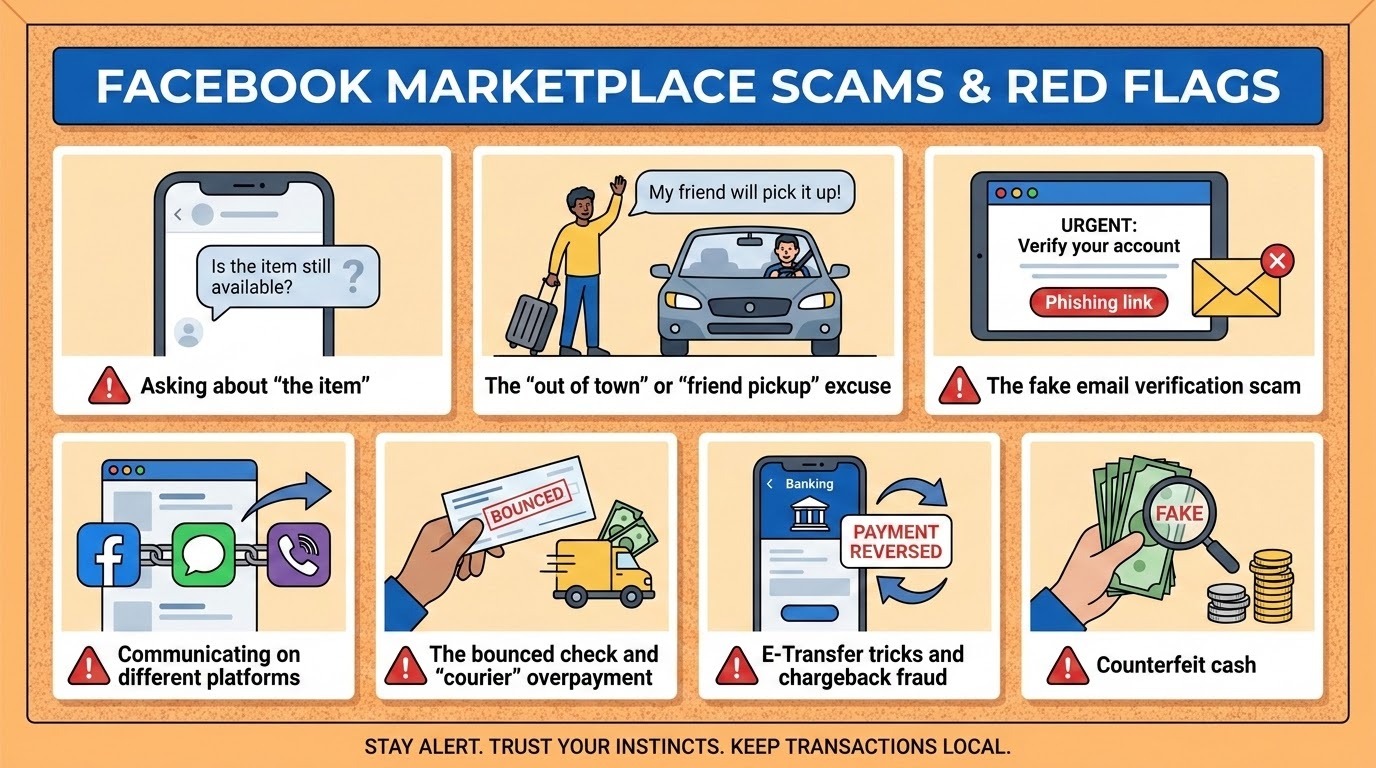
1. Asking about “the item”
When a real person wants to buy your old camera or dress, they say, “What condition is your camera/dress in?”
Scammers use automated bots to blast thousands of sellers at once. The bot doesn’t know what you are selling, so it uses generic language and sends the same messages. If a buyer messages you asking, “Is the item still available?” or “I want to buy the item,” proceed with extreme caution. If they refuse to use the specific name of your product, you are likely talking to a robot, not a human.
2. The “out of town” or “friend pickup” excuse
This is a classic. The buyer messages you with a long and unnecessary story. They claim they live out of state, are currently out of town on vacation, or are deployed in the military. Because they can’t pick it up themselves, they insist on paying you via a mobile app immediately and state that a friend, relative, or mover will come pick up the item.
This setup almost always leads to a fraudulent payment. Once the friend takes your item, the payment is reversed, leaving you with no money and no product.
3. The fake email verification scam
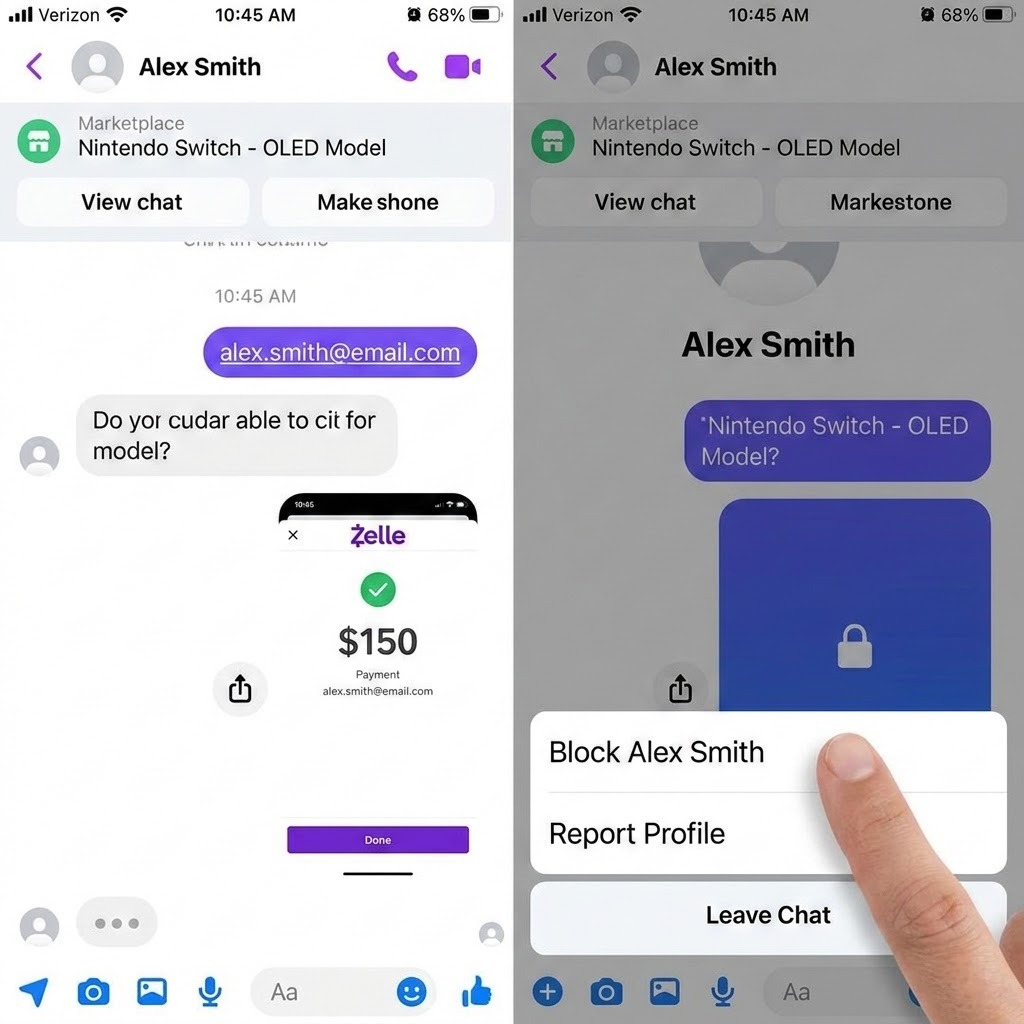
Scammers will ask for your Eメール address, claiming they need it to reserve the item, guarantee payment, or create an official receipt.
Once you provide your email, you will receive a highly official-looking message. It might look exactly like a transfer deposit page from Zelle, Venmo, or your bank. It may even include a fake process to “verify that you’re human.” When you select your bank on this fake page, you will be asked to enter your card number and password. If you do, the scammers instantly gain full access to your bank account or credit card.
4. Communicating on different platforms
Facebook has internal security measures to track fraud. Scammers want to avoid this. If a buyer or seller immediately asks you to text them at their personal phone number, chat on WhatsApp, or communicate on another platform, decline. Keeping your communication inside Messenger is your only paper trail if you need to report it later.
5. The bounced check and “courier” overpayment
In this scenario, the buyer offers to pay with a personal check. Often, they will write the check for more than your asking price. They will claim the extra money is to pay for their courier or mover, who will pick up the item. They ask you to deposit the check, keep your share, and send the extra cash to the courier via a cash app. However, the check is completely fake. It takes days for a bank to catch a bad check. By the time the check bounces and the bank removes the funds from your account, you have already sent your real money to the courier and lost your items.
6. E-Transfer tricks and chargeback fraud
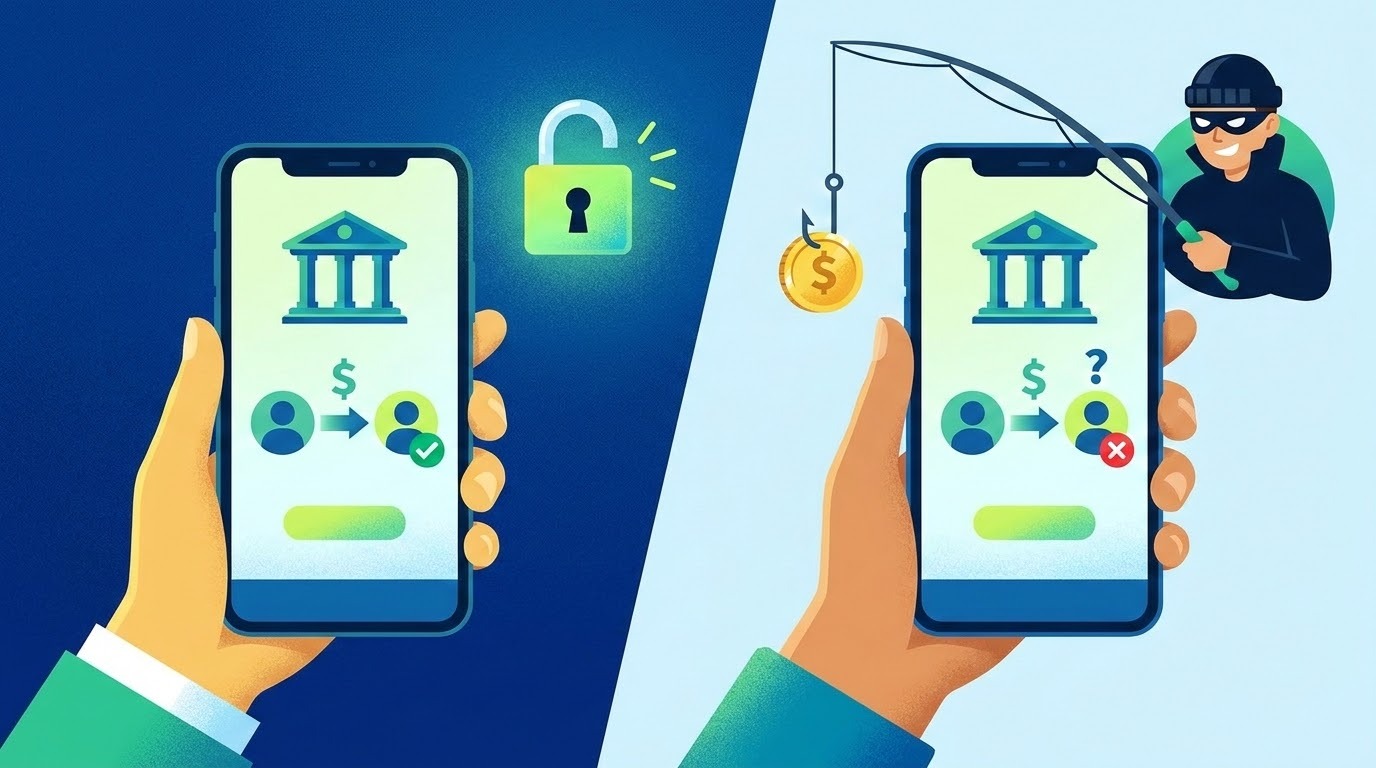
Digital payment apps are convenient, but fraudsters often use them to scam money. Watch out for these specific e-transfer tricks:
- Fake Payment Links: Through platforms like Meta Pay, scammers send a link that you supposedly need to click to “receive the cash.” The site then asks for your bank details.
- Screenshot Fraud: The buyer sends you a screenshot of a completed payment confirmation, aggressively requesting that you hand over the item because they’ve “already paid.” These screenshots are easily doctored in Photoshop or AI. Always check your actual bank or app balance independently.
- The Accidental Overpayment: The scammer sends you money (often using a stolen credit card), but sends too much. They frantically ask you to refund the difference. Later, the original stolen payment is flagged and reversed by the bank, but the “refund” you sent them came from your legitimate funds. You lose twice.
- PayPal Chargebacks: A buyer pays via PayPal Goods & Services, picks up the item in person, and later files a claim saying the item was never 配達された. Because you don’t have a shipping tracking number to prove delivery, PayPal refunds the buyer.
7. The comment section lurker
Instead of messaging you directly on Facebook Marketplace, some scammers will comment on your recent Facebook posts. They might comment on a photo saying, “Interested in the item, please PM me.” This is often a tactic used by compromised accounts trying to bypass Marketplace filters.
8. Counterfeit cash
While we often worry about digital fraud, analog fraud is still alive and well. If you are selling a high-ticket item like a laptop, smartphone, or designer bag, scammers may hand you an envelope of cash in a dimly lit parking lot. Always count the cash and check for watermarks. Counterfeit bills are incredibly common in local meetups.
Tips to avoid scams and stay safe on Facebook Marketplace
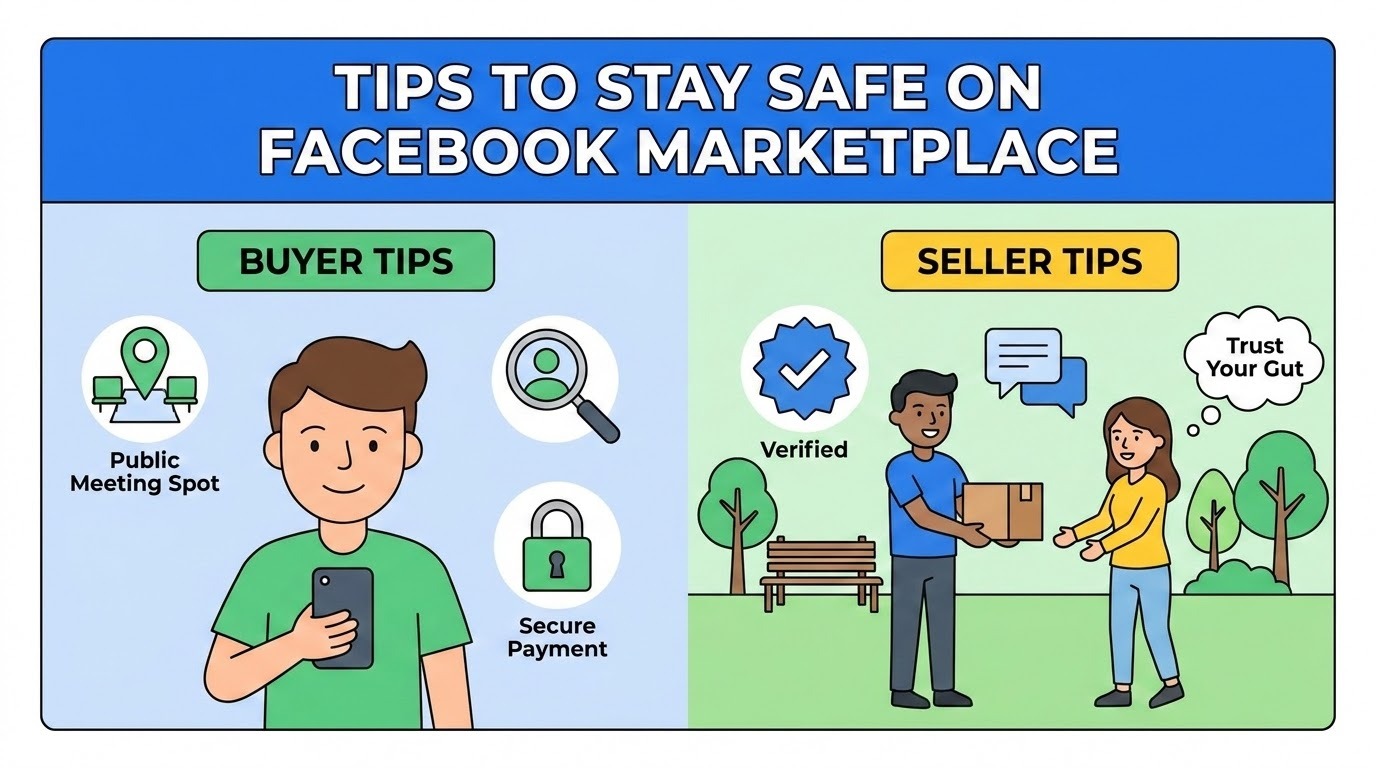
Knowing the red flags is just step one. With a clear safety 戦略, you can confidently drive leads and sales for your items without the fear of getting scammed. Here are the core tips for staying safe on Facebook Marketplace.
1. Veto the “Too Good to Be True” deals
Is a brand-new PS5 listed for $100? It’s a scam. If a deal defies logic, walk away. If you are buying, ask the seller for more photos or videos showing the items’ condition and authenticity. Ask the seller to take a picture of the item with today’s date written on a piece of paper, or with a random project like a spoon sitting next to it. Scammers who steal photos from eBあるy can’t fulfill that request.
2. Check their profile
Whether you’re a seller or a buyer, take a few minutes to investigate who you are talking to. Click on their name. Was the account created this week? Do they have zero friends? Have they posted recently? Also, check for local context. If their profile says they live in London, but they want to buy your lawnmower in Ohio, they may be scammers.
3. Guard your personal information
Scammers always ask for your personal information, like your email address or phone number. They will use it to run the Google Voice verification scam or to send you a fake Zelle phishing email. Nobody needs your personal phone number or email address to buy a used couch. Keep every single message inside the Facebook Messenger app and never give them your personal information.
4. Don’t fall for fake emails
What if your email address leaks? Scammers send fake emails that look like they are from PayPal, Venmo, Zelle, or Cash App. These emails will claim that the funds are “on hold” until you ship the item and provide a tracking number. This is a lie. Payment apps do not work this way. If the money isn’t showing up inside your actual app when you log in independently, the money does not exist. Do not click links in these emails, and delete them immediately.
5. Cash only always
Stick to cash whenever possible. Check the bills for watermarks if you are selling a high-ticket item. If you absolutely must use an app like Zelle or Venmo, never look at their screen. Scammers use fake apps to show a “successful payment” screen. You only hand over the item when you open your own app on your own phone and see the money sitting in your balance. If you’re 配送 via courier, take photos or videos to document the shipping process. If you transact in person, be sure to keep proof in case the scammer requests a refund after receiving the item.
6. Meet in public
Never give out your home address easily for portable items. Meet at a local police station, which is one of the safest trading places with 24/7 cameras. Bank lobbies, libraries, or busy coffee shops work too. If you are selling a heavy item that requires them to come to your house, move it to the garage or driveway before they arrive. Never let a stranger walk through your home.
7. Trust your gut
This is perhaps the most important rule of all. We as humans have an innate instinct for danger. If a transaction feels weird, if the buyer is too aggressive, if the seller is too evasive, or if the location feels unsafe, cancel the deal. It is better to miss out on a good sale than to lose your money or put your safety at risk. There will always be another buyer.
What to do if you get scammed on Facebook Marketplace
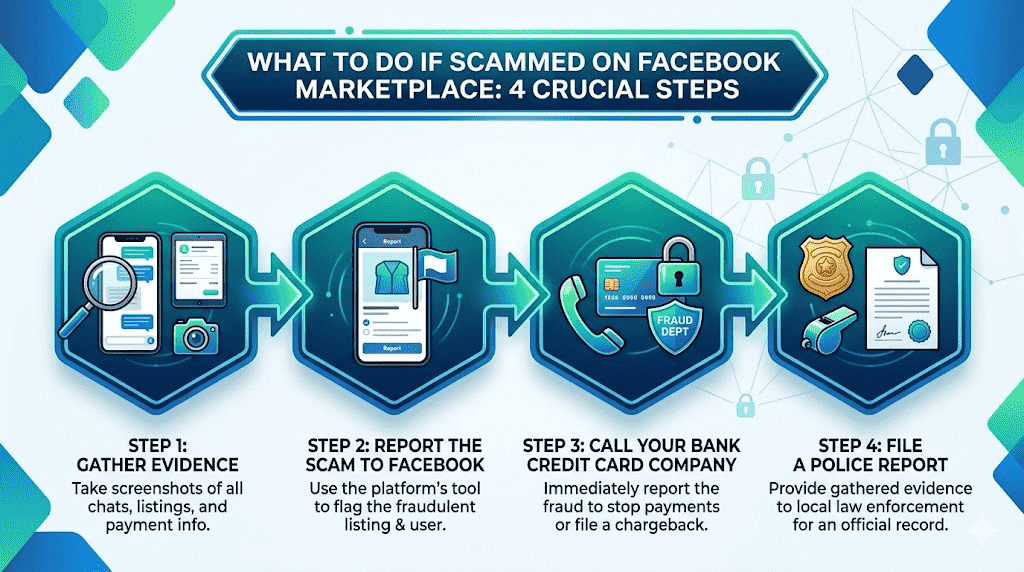
Let’s say you are reading this blog post a little too late. If you have already sent the money or you have already shipped the item to scammers, act fast. Here is your step-by-step recovery plan.
Step 1: Gather evidence
The first step is to gather evidence. Take screenshots of the entire conversation history, their profile picture, their name, and any payment information they gave you. Once you have everything screenshotted and saved, you can block them.
Step 2: Report the scam to Facebook
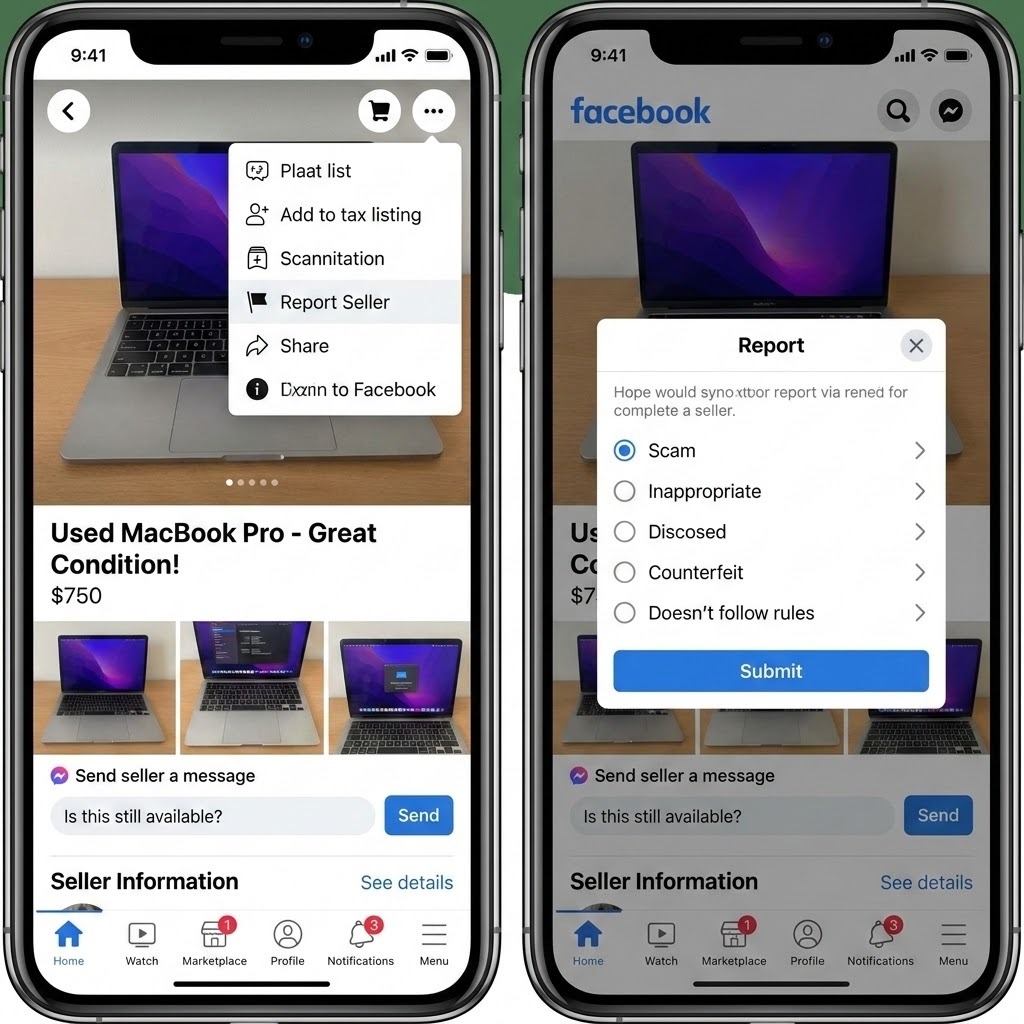
Go to the listing or the seller’s profile, click the three little dots, and select “Report Seller.” Choose “Scam” as the reason. This might not get your money back, but it helps Facebook shut down its profile.
Step 3: Call your bank or credit card company
If you paid via wire transfer, debit card, or credit card, call your bank’s fraud department right now. Tell them you were the victim of a scam. If the payment was via a credit card, you have a very good chance of doing a chargeback. If it was a wire transfer or Zelle… it’s going to be much harder, but you still need to report it so the bank can flag the scammer’s receiving account.
Step 4: File a police report
Go to your local police station and file a report. Honestly? The local police probably won’t be able to track down a scammer operating out of another country. However, having an official police report on file is often required by banks or insurance companies before they will reimburse you for fraud.
Facebook Marketplace Scams FAQs
1. How to tell if a buyer is scamming you on Facebook Marketplace?
Watch how they talk and how they want to pay. If they refuse to use the specific name of your product and just call it “the item,” you are probably talking to a bot. Other massive red flags include refusing to meet in person, asking to text off the Facebook app, wanting your email address, or sending a “friend” to pick up the item. Real buyers ask normal questions and pay in cash face-to-face.
2. What are the current scams on Facebook Marketplace?
Right now, scammers are running a few different tricks. The biggest ones are:
- The Friend Pickup: They claim they are out of town, pay with a stolen account, and send a “friend” to pick up the item before the payment bounces.
- The Courier Overpayment: They write a fake check for way more than the asking price and ask you to send the extra cash to their “mover.”
- Fake Payment Screenshots: They show you a photoshopped receipt to prove they paid, hoping you won’t check your own app.
- The Accidental Overpayment: They send too much money using a stolen credit card and beg you to refund the difference.
3. Will Facebook refund my money if I get scammed?
Usually, no. Facebook only has Purchase Protection if you use their official checkout button and the item is shipped to you. If you meet up locally and hand over cash, Venmo, or Zelle, Facebook cannot get your money back. You are on your own.
最終的な考え
Buying and selling locally shouldn’t be a nightmare. Keep your guard up and stick to the rules: only take cash, meet in a public place, and never give out your phone number or email. Most importantly, trust your gut. If a deal feels too complicated, rushed, or just weird, cancel it.
If you are tired of dodging scammers on local marketplaces just to find cheap inventory, let Sup Dropshipping handle it. We source high-quality products directly from trusted factories at the best prices. You get zero sketchy meetups, no fake payment links, and real tracking numbers for your buyers. Stop risking your money with unverified sellers. お問い合わせ today to build a safer, more profitable business.
著者について

5月
May は Sup Dropshipping のブロガーで、e コマースで 5 年以上の経験があります。 May は e コマースに対する情熱から、最新のトレンドを常に最新の状態に保ち、ブログを通じて専門知識を共有しています。余暇には、小説を読んだり、友達とチャットしたりするのが好きです。

コメントを残す