


The Ultimate Sourcing Strategy Guide for E-commerce Sellers in 2026
When starting an e-commerce business, it is natural to focus on marketing. Sourcing often feels like a simple checkbox.
But in reality, sourcing is the engine of your business. It dictates your product quality, your profit margins, and your ability to scale. If your sourcing strategy is weak, no amount of marketing can save you from high returns, stockouts, or price wars.
In this article, we will walk through the concept of strategic sourcing and provide you with 6 proven strategies to help you find hidden suppliers, ensure quality, and build a supply chain that puts you ahead of the competition.
What is Strategic Sourcing?
While the basic sourcing meaning refers simply to the act of finding suppliers to buy goods from, strategic sourcing goes further.
Strategic sourcing is a process that aligns your purchasing power with your long-term business goals. Not just finding the cheapest goods, but taking a holistic view of spend analysis, market research, and supplier selection, and building meaningful long-term relationships.
In the corporate world, this is often described as a 7-step cycle, from analyzing category spend to managing supplier contracts. However, for e-commerce sellers, the definition is more practical: strategic sourcing helps them secure a reliable supply of profitable products that drive efficiency and business growth.
Strategic Sourcing vs Traditional Sourcing: What’s the Difference?
To truly optimize your supply chain, it is crucial to understand the difference between strategic sourcing and traditional sourcing.
Traditional Sourcing focuses on short-term cost savings. In this approach, the price is the primary component. For example, rushing to علي بابا to find the supplier with the absolute lowest unit price to fill an immediate order. While this might save money upfront, it is reactive and often leads to quality issues, instability, and hidden costs down the road.
Strategic Sourcing, on the other hand, is proactive. It views sourcing as a long-term procurement strategy where low price is just one part of it. Strategic sourcing focuses on the total cost of ownership, which includes شحن, quality control, payment terms, and risk. It aims to build relationships with suppliers who can help your business grow, rather than just vendors who sell you goods.
Here is a quick breakdown of how the mindset shifts for a successful seller:
| ميزة | Traditional Sourcing | Strategic Sourcing |
|---|---|---|
| Primary Component | سعر | Value (Total Cost of Ownership) |
| Mindset | Reactive (Order-driven) | Proactive (Planning ahead) |
| Goal | Fill the order | Build Competitive Advantage |
6 Proven Sourcing Strategies for Sellers
Many sellers treat sourcing as a one-time job. In reality, successful sellers know it is a constant process. To help you move from a beginner to a pro, here are six proven sourcing strategies. These will help you save money, reduce risk, and grow your store.
1. Don’t Rush to Manufacture
One of the biggest reasons new businesses fail is simply running out of money. Sellers often get excited and order 1,000 custom products from a factory before they even know if customers want them. This is a huge risk.
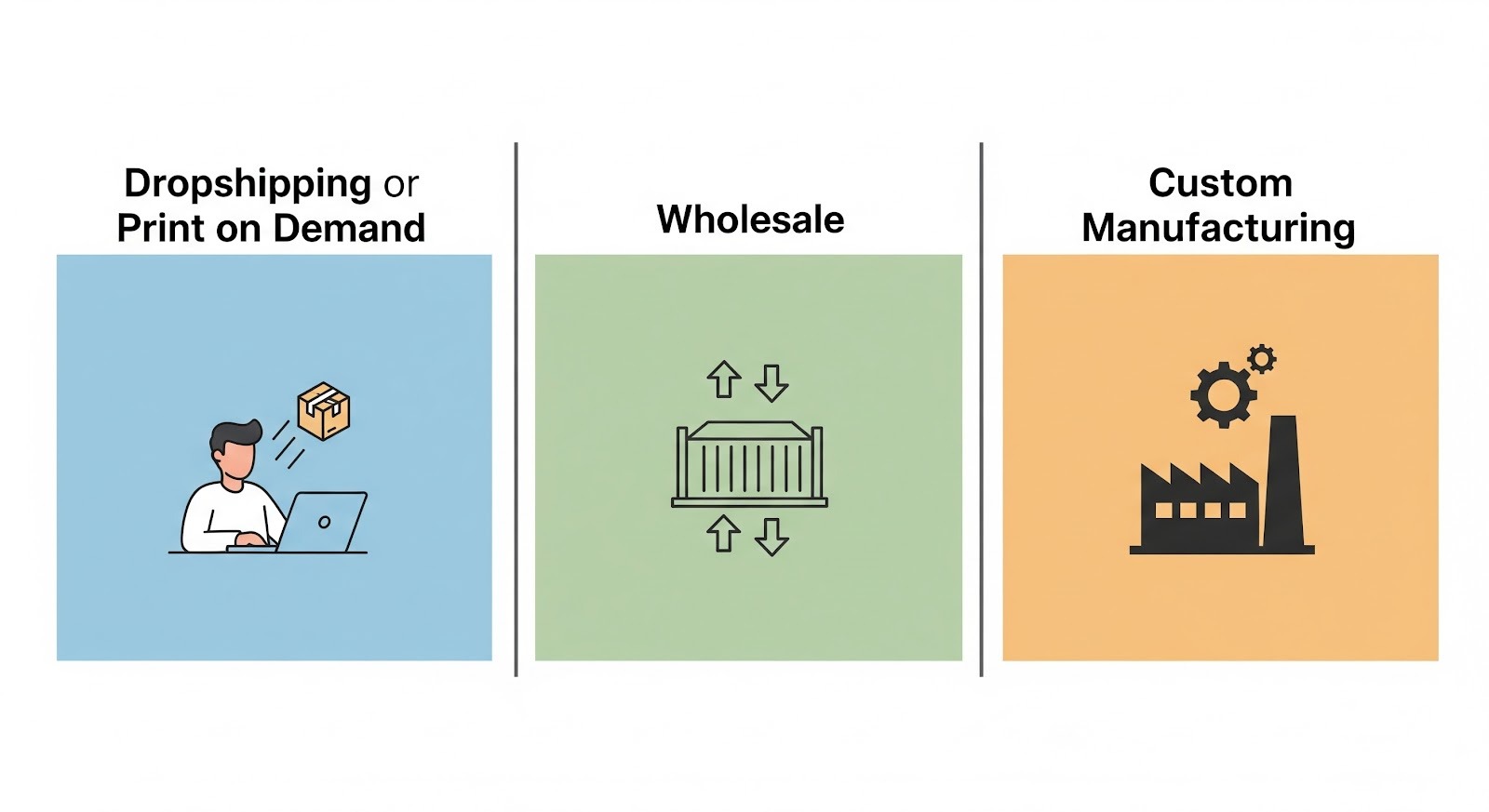
The smartest strategy is to match your sourcing method to your product’s stage.
Dropshipping or print on demand
In the beginning, your goal is to buy data, not inventory. You want to know: “Will people actually pay for this?” Use dropshipping or Print-on-Demand (POD).
إسقاط الشحن means that once a customer orders from your store, you buy the product from a supplier who ships it directly to them. POD works similarly but for custom-designed products.
According to market analysis by Grand View Research, the dropshipping market is projected to reach $1,253 billion by 2030. It is growing rapidly precisely because retailers use it as a low-risk entry point. There is no inventory needed; you might not make a lot of profit per sale, but you are testing safely.
Wholesale
Once your store traffic is up and products start selling daily, you can switch to wholesale. Why? Because dropshipping becomes slow. Customers are unlikely to wait weeks for shipping if your suppliers are far away.
مع بالجملة, you buy small batches in advance. As for shipping, there are two main ways:
- Self-fulfillment: Suppliers ship products to your own garage or warehouse, and you pack them yourself.
- 3PL: You send products to a third-party logistics company. They handle the storage and shipping to your customers.
Either way, your customers get their orders much faster than with dropshipping.
Custom Manufacturing
Only when you have steady sales should you go to a big factory. This is where you stop selling generic products and start to create your own brand. You work with the factory to open new molds, add your logo, design custom packaging, or improve products based on customer feedback.
By waiting until this stage, you avoid the risks of unsold products piling up in your garage.
2. Finding Hidden Suppliers

If you only search on the first page of Aliexpress or Alibaba, you are seeing the same suppliers as everyone else, and you are selling the same products as everyone else. This leads to a price competition where everyone sells the exact same thing.
To win, you need to combine online searches with offline resources.
Though the Internet develops rapidly, there are still many hidden suppliers who are terrible at digital marketing. They don’t have nice websites or rank high on Google. They focus their energy on traditional trade shows to meet big buyers face-to-face, rather than optimizing their Alibaba listings. They are busy making products for big brands and don’t spend time on SEO.
This is your chance. These suppliers gather at huge physical hubs like the سوق ييوو or major trade shows like the Canton Fair. Suppliers who attend these fairs are vetted. They are usually more professional and capable than the random suppliers you find on generic search engines.
3. Quality Control

Ordering a sample is the non-negotiable first step in sourcing. You absolutely need to see, touch, and test the product before committing any money.
However, receiving a perfect sample is not a guarantee of success. Factories often show their best samples to impress you, but the mass production is done by assembly line workers who might rush the job. As a result, the inventory you receive later might look very different from that one perfect sample.
Ignoring this risk is expensive. According to Statista, 7.4% of the e-commerce market revenue worldwide was returned to the retailers in 2025. To avoid becoming part of this statistic, you need a verification step before shipping.
For large orders, hiring a professional inspector is the safest route. For smaller orders, you can conduct a live video inspection. Schedule a video call with the supplier, ask them to open random boxes that you select, and show you the product details in real-time.
Whether you pay an agency or do it yourself via video, the goal is the same: ensure the mass production matches your approved sample before the goods leave the factory.
4. Product Bundling
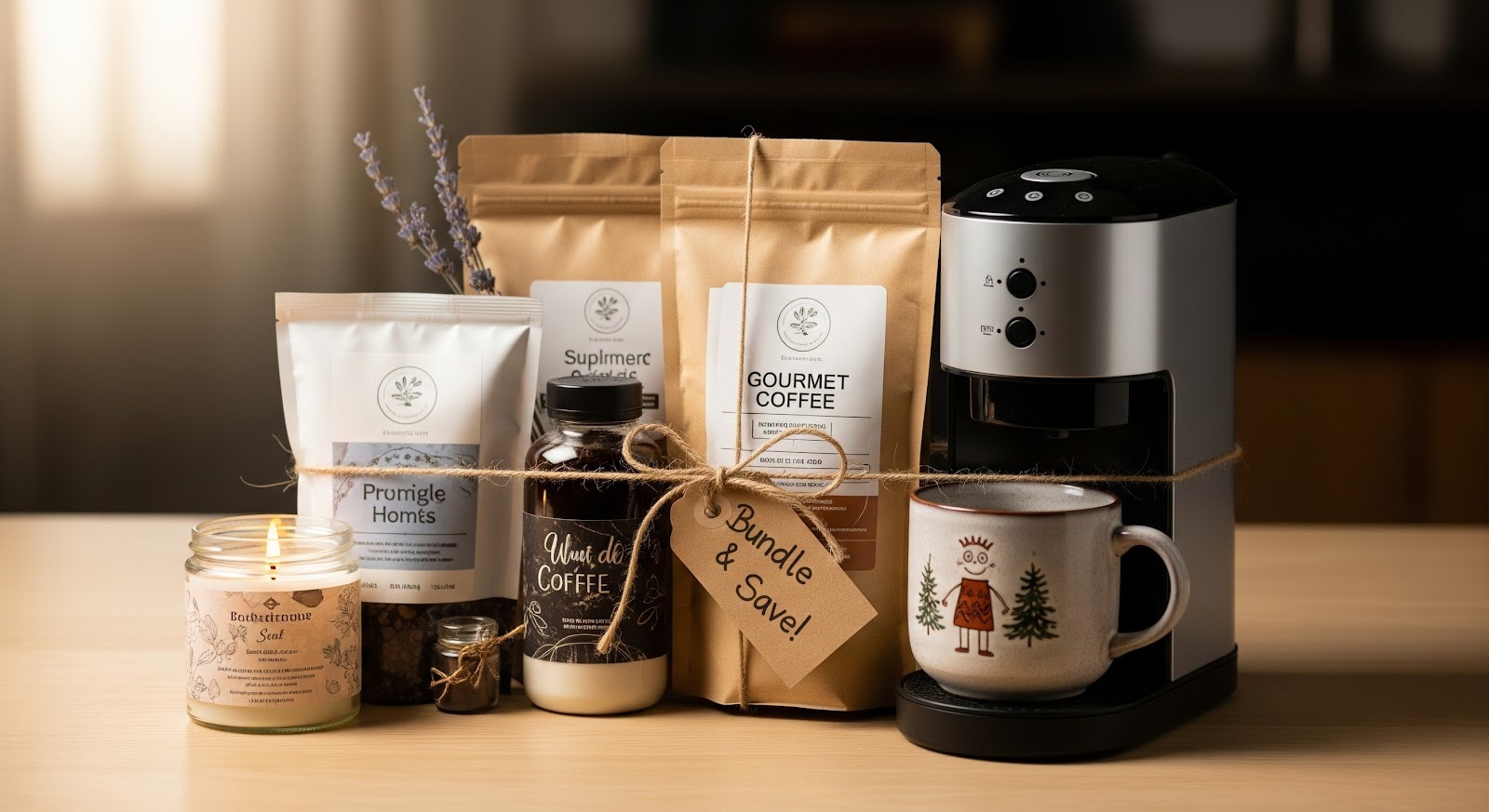
Sourcing is not just about negotiating lower prices; it’s about increasing the value of what you sell. One of the best ways to do this is by Bundling.
According to a recent article in the مراجعة أعمال هارفارد, customers often prefer bundles because they simplify choices and reduce cognitive load. It is much easier for a customer to buy a complete coffee lover’s kit than to search for a grinder, a scoop, and a bag clip separately.
Instead of sourcing a generic coffee grinder that looks like everyone else’s, ask your supplier to package it with a complementary item, like a stainless steel spoon.
You are no longer selling a commodity; you are selling a solution. This makes your product unique, allowing you to charge a higher price without fighting a price war on the main item.
5. Building relationships

Many new sellers make the mistake of focusing purely on the transaction, fighting for every penny, and only communicating when there is a problem. However, the most successful sellers treat their suppliers as long-term partners. Investing time in this relationship allows you to unlock strategic benefits.
For instance, when production lines are fully booked before major holidays, a factory will prioritize the clients with whom they have a strong relationship, ensuring your order gets shipped on time.
Furthermore, a supportive supplier will often share their latest product designs with you privately before they list them publicly. This gives you an advantage to launch new trends before your competitors even see them.
6. Sourcing by Product Mix
Throughout this guide, we have focused on how to find and manage the best manufacturers. However, direct sourcing is not always the right answer for every business model.
There is a common belief that you must always go directly to the factory to get the best price. While this is true for a hero product (a single item selling thousands of units), it can be a trap for a store with a diverse catalog.
Imagine you run a pet supplies store. You sell nylon leashes, stainless steel bowls, rubber chew toys, and so on. It’s clear that a steel factory makes bowls, but it doesn’t make nylon leashes. If you try to go directly for everything, you will have to manage 10 or even more different factories. On top of that, factories usually have a high Minimum Order Quantity (موك). As a beginner, you likely cannot meet the MOQ for 10 separate factories. Trying to do so is too risky.
For most new or mid-sized sellers dealing with multiple products, it is smart to use an Intermediary or a professional وكيل دروبشيبينغ. They act as a catalog manager. They can source all these different products from their network of factories, consolidate them into one shipment, and send them to you. Yes, they charge a service fee, but they solve two problems: they handle the complex logistics of dealing with 10 factories, and they accept lower MOQs than a factory would.
The bottom line: Use the strategies above to go direct when you have a winning product that needs maximum margin. Use an intermediary when you need variety and convenience to test the market.
How Sup Dropshipping Helps You Execute These Strategies
As discussed above, managing everything alone is overwhelming. This is where Sup Dropshipping acts as your all-in-one partner to bridge the gap between you and the best manufacturers in China. We can help you:
- Access Hidden Suppliers: Tap into our network of vetted factories without flying to trade shows.
- Quality Control: We inspect your goods before shipping, saving you the cost of third-party agencies.
- Easy Bundling: Create custom kits and branding to boost your product value without holding massive inventory.
- Logistics: We consolidate orders from multiple factories, provide inventory storage, and offer exclusive discounted shipping rates to maximize your profit.
افكار اخيرة
Sourcing is not a static task; it is the heartbeat of your business. It requires a balance of caution (checking quality, testing markets) and aggression (building relationships, bundling for value).
Whether you are just starting your first dropshipping store or looking to optimize a brand, the principle remains the same: Don’t just buy products; build a supply chain.
Start with the strategy that fits your current stage. Let Sup Dropshipping handle the complex backend work so you can focus on marketing and growing your brand.
عن المؤلف

يمكن
ماي هي مدوّنة في Sup Dropshipping وتتمتع بخبرة تزيد عن 5 سنوات في مجال التجارة الإلكترونية. إن شغف ماي بالتجارة الإلكترونية يدفعها إلى البقاء على اطلاع بأحدث الاتجاهات ومشاركة خبراتها معك من خلال مدونتها. تحب في أوقات فراغها قراءة رواية أو الدردشة مع الأصدقاء.
اترك تعليقاً