


Shopify vs Big Cartel: Which Platform Is Best for Your Business in 2026?
Shopify, founded in 2006, and gran cartel, founded just one year prior, are both well-known and popular online store builders. However, as of late 2025, the picture is clear: Shopify is the dominant force in the US ecommerce market, commanding roughly 27% of the platform market share, while Big Cartel serves a smaller, distinct niche.
From the market share alone, Shopify appears to be the undisputed winner. Yet, the big cartel vs Shopify battle goes far beyond raw statistics. It boils down to who you are and what you plan to achieve. Are you an independent artist looking for a side hustle? Or are you an entrepreneur building a scalable empire?
In this deep comparison, we will break down the true costs, capabilities, and growth potential of both platforms to help you figure out which one truly suits you best.
Big Cartel vs Shopify: Quick Verdict
| Comparison Area | Shopify | gran cartel | Ganador |
|---|---|---|---|
| The Real Cost | Higher monthly fees; app costs add up; 0%-2% transaction fee | Free plan available; low monthly fees; near zero app costs | gran cartel |
| Online Selling Power | Full suite of advanced tools | Basic store functionality only | Shopify |
| Design and Usability | Powerful editor and massive professional theme library. | Simple dashboard, but templates are limited | Shopify |
| App Market | Over 8,000 apps for massive scaling and complex needs. | Only 46 integrations; sufficient for basic needs | Shopify |
| Marketing and SEO | Full technical control over SEO; powerful built-in marketing tools. | Limited SEO control; weak marketing infrastructure. | Shopify |
| Dropshipping Capabilities | Vast ecosystem of automated apps | Very limited integrations; only viable for small-scale | Shopify |
| Support and Community | 24/7 support via instant channels (Live Chat, phone for top tiers) | 24/7 support via messaging/email only; lacks true real-time instant contact. | Shopify |
Who Should Choose Which Platform?
- gran cartel is the choice for minimalists. It is designed for creators with a limited catalog (under 50 items) who prioritize minimal costs and simplicity above all else.
- Shopify is the choice for growth. It provides the professional operating system and advanced features required to scale, handle complexity, and sustain long-term business growth, despite the significantly higher operational costs.
To fully understand these conclusions, we will now compare the two platforms in detail, starting with their costs and fees.
1. The Real Cost: Big Cartel vs Shopify
Money is the first thing every new seller looks at. Here is a quick look at the core fees for both platforms.
| Cost Component | gran cartel | Shopify | Ganador |
|---|---|---|---|
| Monthly Subscription | $0 – $30/month | $29 – $399/month | Big Catel |
| Tarifas de transacción | 0% Platform Fee | 0% – 2.0% Platform Fee | |
| Apps costs | Near $0 | $50 – $150+/month | |
| Theme costs | All themes are Free | $0 for Free; $180 – $360 for Premium |
Leer más: How Much Does Shopify Cost?
Monthly Subscription
The upfront pricing difference is dramatic. Big Cartel is designed to be accessible; Shopify is designed to be a professional operating system.
gran cartel
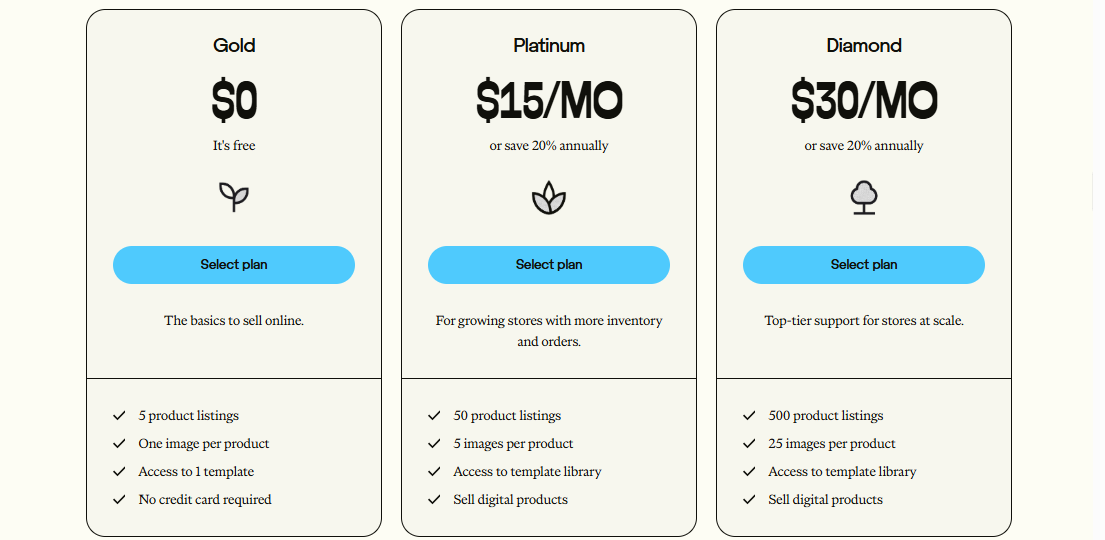
Big Cartel offers plans priced from $0 to $30/month (or $0 – $24/month if paid annually).
- los Platinum plan ($15/mo) covers basic ecommerce features and tools, including inventory and shipment tracking, discount codes, and Google Analytics integration.
- los Diamond plan ($30/mo) offers more advanced features, such as automatic discounts, abandoned cart recovery, and up to 500 product listings.
- los free Gold plan allows 5 product listings and 1 image per product. However, it lacks critical features needed for serious selling, such as shipment and inventory tracking, and using a custom domain.
Shopify
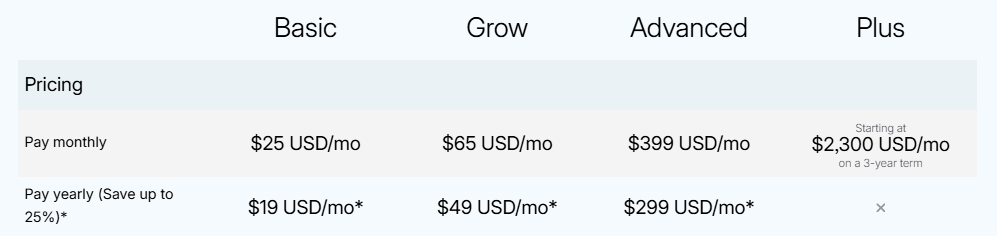
Shopify’s plans are priced from $29 – $399/month (or $19 – $299/month if paid yearly).
los Basic Plan ($39/mo) is the most used and the standard starting point. It includes powerful core features like unlimited products, 24/7 support, abandoned cart recovery, a built-in blog, and basic reporting. This plan is designed to be a complete, scalable business toolkit right out of the box.
Tarifas de transacción
The transaction fee generally involves two parts:
- Platform Transaction Fee: The extra fee the platform charges when you use a third-party payment gateway.
- Payment Processor Fee: The standard fee charged by PayPal or Stripe.
gran cartel charges 0% Platform Transaction Fee. They only make you absorb the payment processor fee. This keeps the fee structure simple and transparent.
Shopify transaction fee is 0% only if you use Shopify Payments—Shopify’s internal gateway. If you choose to use a third-party gateway, Shopify will charge an additional 0.5% – 2.0% fee, depending on your subscription plan.
Tarifas adicionales
There are some additional fees that impact your total cost.
App Costs:
- Shopify has a massive App Store. If you want more tools for marketing, dropshipping automation, or accounting, you may spend $50 – $150 per month on apps. This investment is crucial for scaling.
- gran cartel does not have a large third-party app ecosystem. If you choose to upgrade to their highest plan, the Diamond plan ($30/mo), you unlock most of their essential features and basic integrations.
Theme Costs
- Big Cartel’s themes are free on Platinum plans.
- Shopify provides free themes, but high-quality premium themes (optimized for conversion and unique branding) often cost between $180 – $360 (one-time purchase).
The Cost Winner
If we strictly calculate the total cost based on monthly fees, platform transaction fees, and zero app/theme expenditures, Big Cartel is the undisputed cost winner. However, this is a victory of affordability over capability. The savings are undeniable, but they come at the cost of limiting your product capacity and advanced features.
Recommended Read: Shopify vs Squarespace: Which One Should You Choose?
2. Online Selling Power: Big Cartel vs Shopify

When we look at price alone, Big Cartel has a huge advantage. But now let’s look at the actual power of these two platforms, covering tools for selling more stuff, multichannel reach, and automation. This is where Shopify shows its true value.
Tools for Selling More Stuff
Shopify has the features to get people to buy stuff and come back for more. In Shopify, you can easily set up different product variations, link product collections, or automatically create bundles and discounts without needing extra apps. The platform makes sure you can email people who leave things in their cart (recover abandoned carts) and mark high-value customers as VIPs for special deals later.
Now compare that to gran cartel. It is just a basic store page. You can set up products, prices, and promo codes, and track basic inventory. That’s where the advanced capability stops.
You get the tools to sell, but you get none of the tools to sell better. There is no option for easy bundling, no automatic “you might also like this” suggestions, and no easy way to organize your customers.
Multichannel Selling
If you want a real business, you need to sell everywhere people shop, not just on your own website.
gran cartel lets you connect to Instagram, Facebook, and Google Shopping. This is great. But Shopify is the central hub. It can manage all your sales, inventory, and orders from major marketplaces like Amazon and eBay, plus all your social channels, all from one simple control panel. Big Cartel cannot handle all these channels or manage them centrally.
Automatización y Eficiencia
Time is money. You shouldn’t waste time on manual tasks that a computer can handle. Shopify is more efficient. For example, Shopify’s own AI tool, Shopify Magic, can help you write detailed descriptions and ads in seconds. Big Cartel does not offer any advanced, built-in tool that saves you that kind of time.
Furthermore, Shopify has a powerful system under the hood so that shipping apps, marketing apps, and inventory apps can all plug in easily and work together perfectly. Everything runs automatically. Big Cartel is much simpler.
Online Selling Power Winner
Shopify gives you every feature you need to actually ganar. Big Cartel works if you want a basic storefront for a few items. That is its limit.
3. Design and Usability: Big Cartel vs Shopify
When a customer lands on your store, the design is the first thing they see. If your store looks messy or hard to use, they might leave. Usability is how easy it is for you to build and manage that store.
Theme and Customization
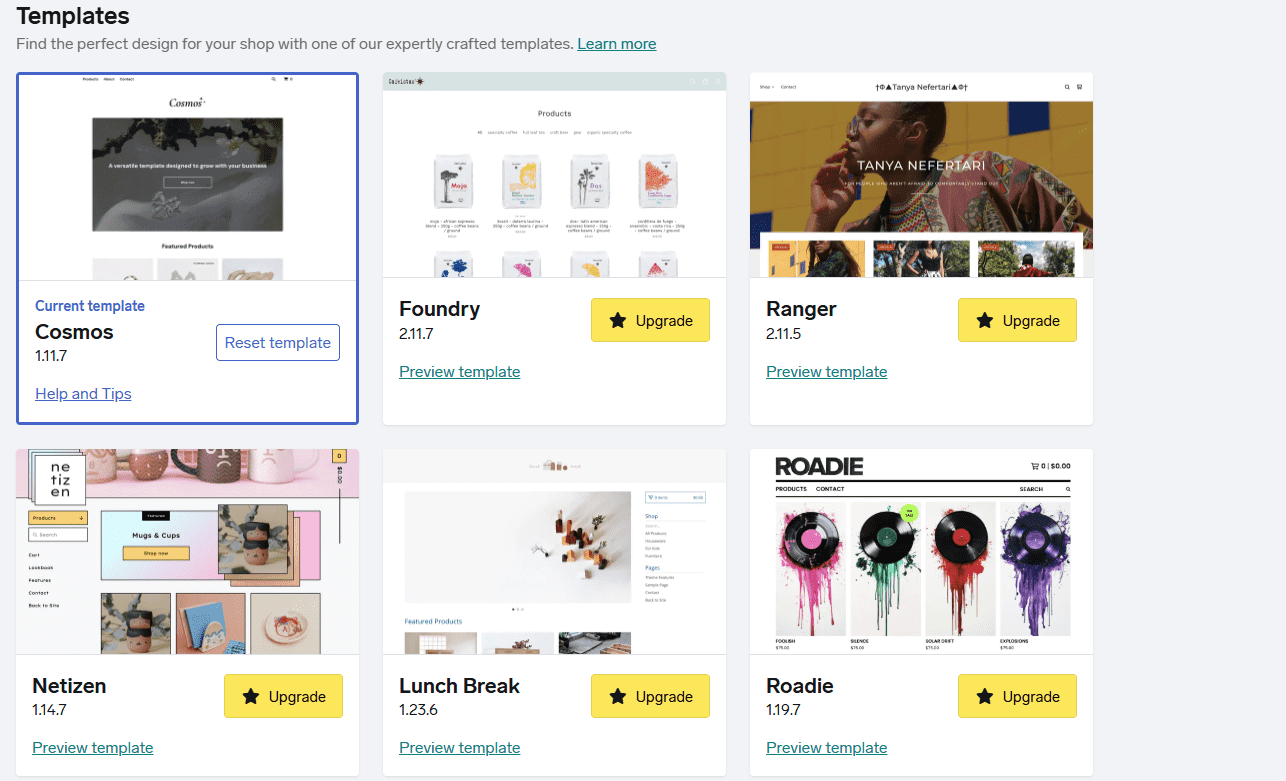
gran cartel offers a selection of about 11 different templates. While the selection isn’t vast, it covers a range of popular aesthetic styles. If you upgrade to the Platinum plan, you gain access to use all of these variations.
However, visually, they feel more like online art portfolios than full-scale ecommerce stores. While it is possible to customize them to a degree, when I tried to do this, I found that the built-in controls were relatively limited.
If you aren’t satisfied with the basics, your only option is to tweak the template’s code for deeper customization. This is great for those comfortable with coding, but it presents a significant barrier for most average sellers.
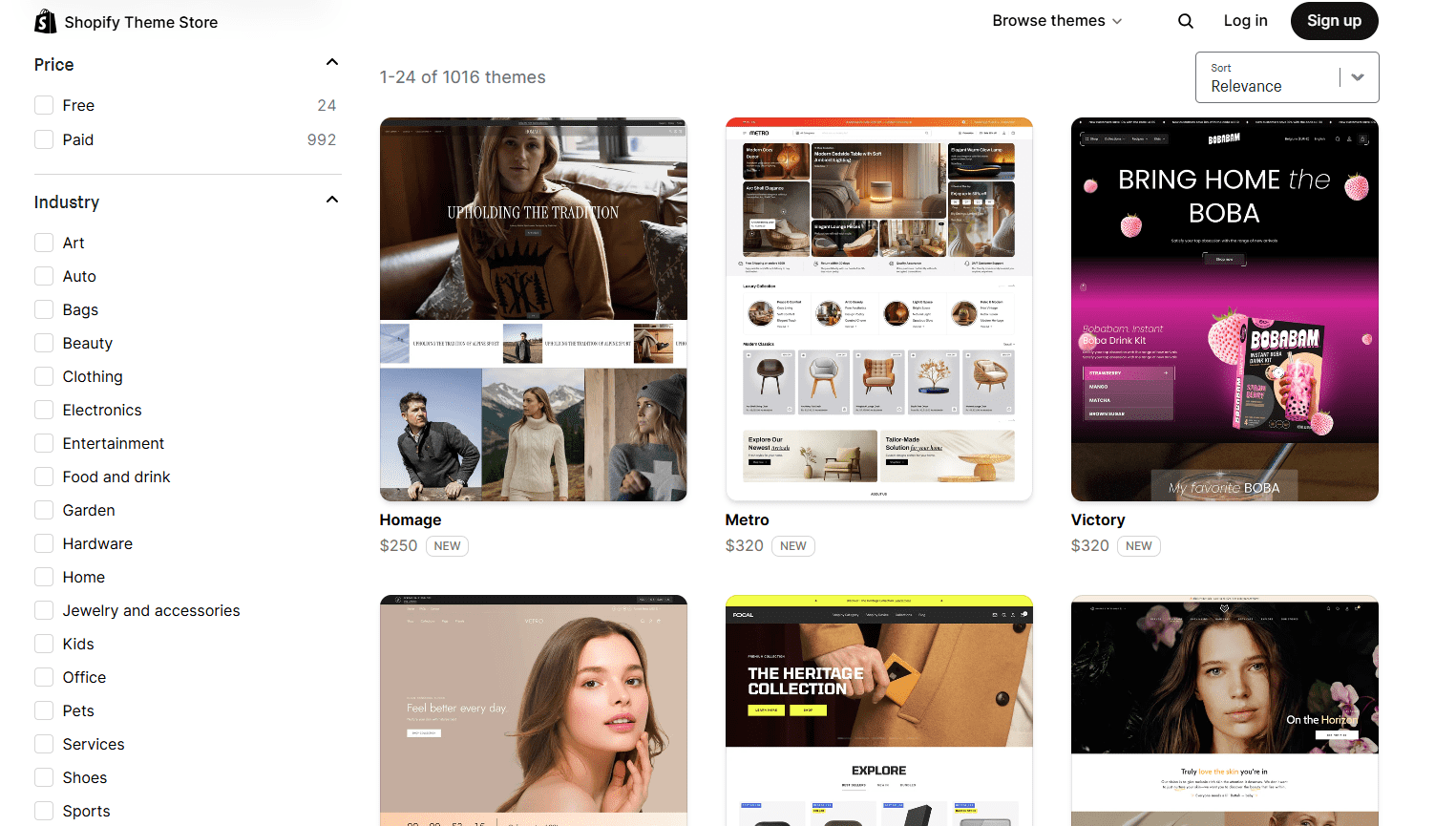
Shopify, in contrast, offers over 1,000 themes. There are roughly 24 free options, while premium themes range from $100 to $400. Because the library is so massive, you can almost always find a theme tailored to your specific niche, whether it’s beauty, fitness, or electronics.
Moreover, many of these themes come pre-loaded with professional features like multi-level menus, video backgrounds, quick-view buttons, and related product displays, saving you from needing third-party plugins.
Facilidad de uso
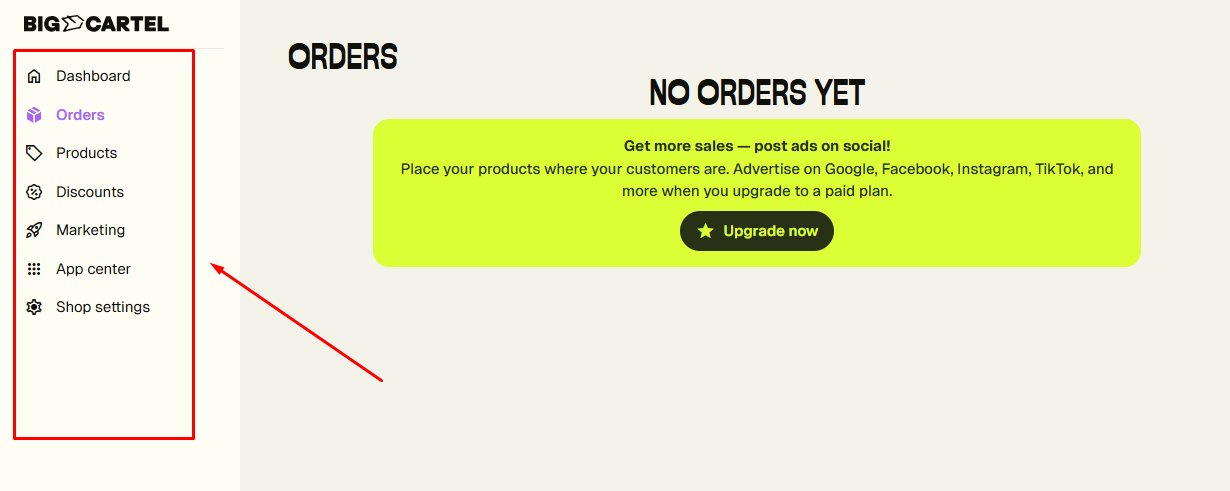
Big Cartel’s dashboard is undeniably clean and uncluttered. It covers the essentials effectively, letting you access analytics, add products, view orders, set up discounts, and change account settings without getting overwhelmed.
However, Big Cartel’s simplicity can sometimes lead to frustration. For example, finding where to actually design your store isn’t intuitive. I had to navigate to “Settings” and then locate the “Shop Designer” button just to reach the visual editor.
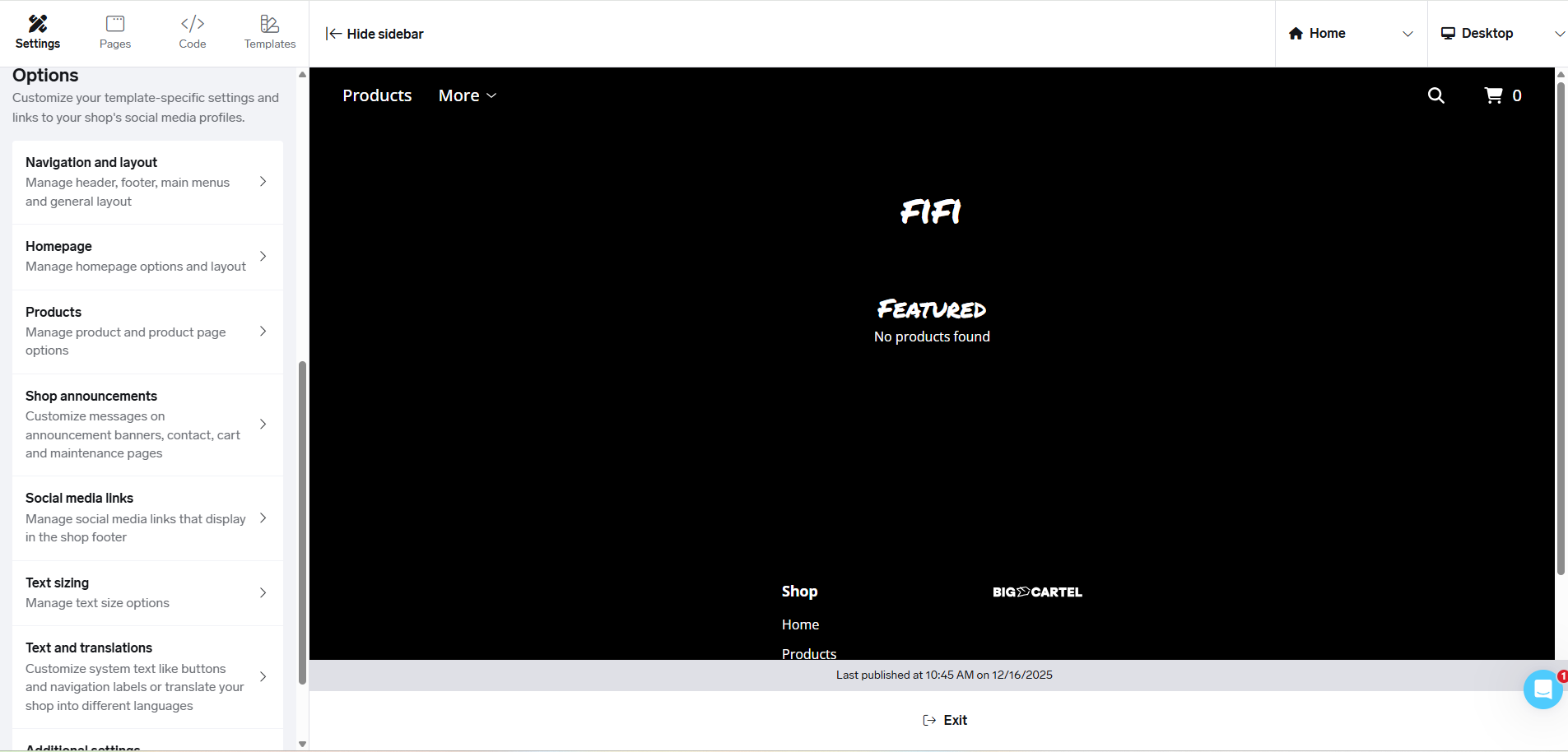
Once inside the designer interface, you can adjust the main menus, the general layout, fonts, and the color palette. However, the editor itself feels somewhat old-fashioned. It gives you very little creative freedom. You can mostly just reorder items in a list rather than truly dragging and dropping elements around the page to create a custom layout.
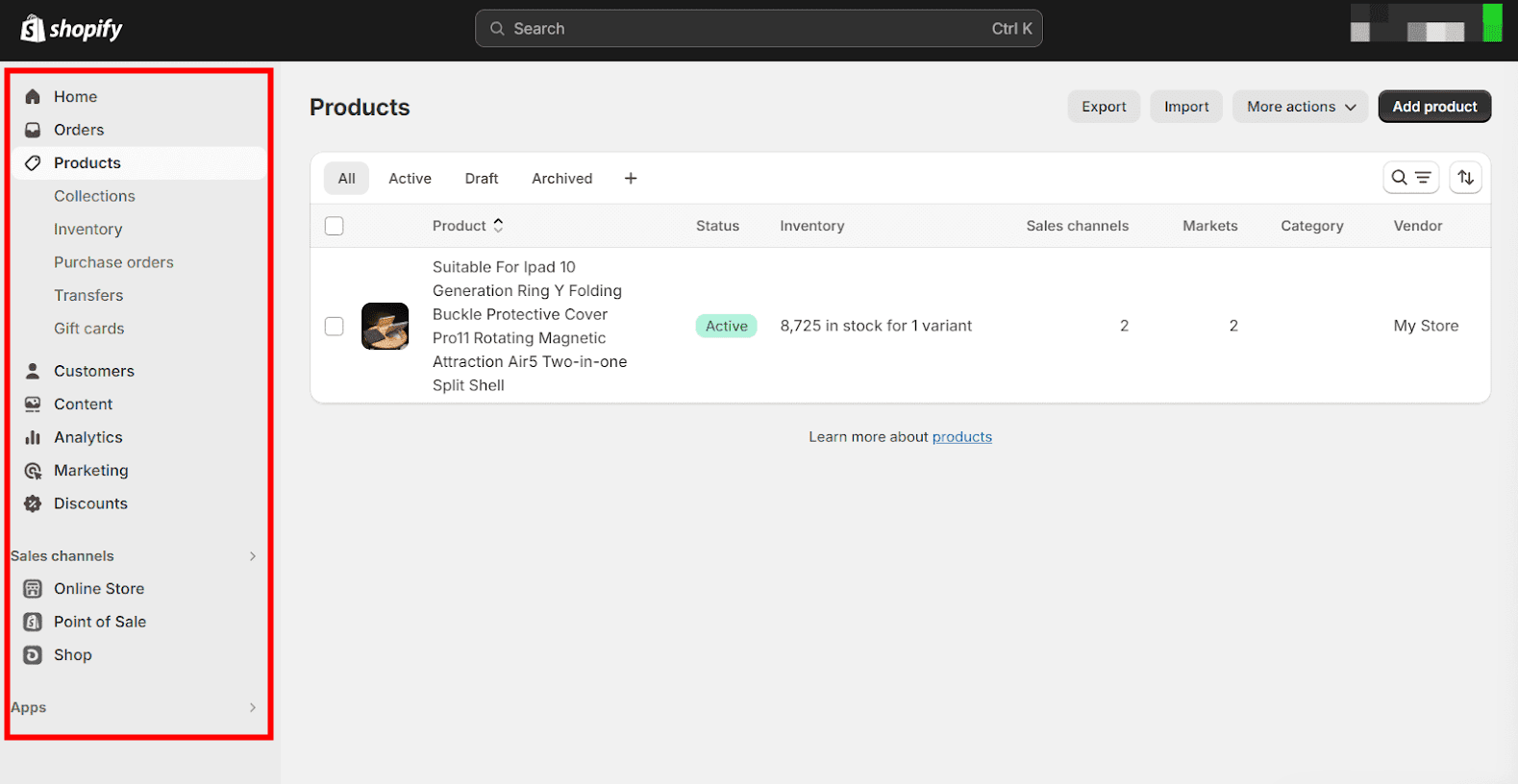
Shopify’s interface is equally easy to navigate when you start, but the information architecture is better. Like Big Cartel, the navigation menu is on the left, giving you instant access to all the platform’s features: orders, marketing, analytics, and more.
The key difference is intuitive organization: you know that designing your webpage happens under the “Online Store” tab, unlike Big Cartel, where it’s buried in “Settings.”
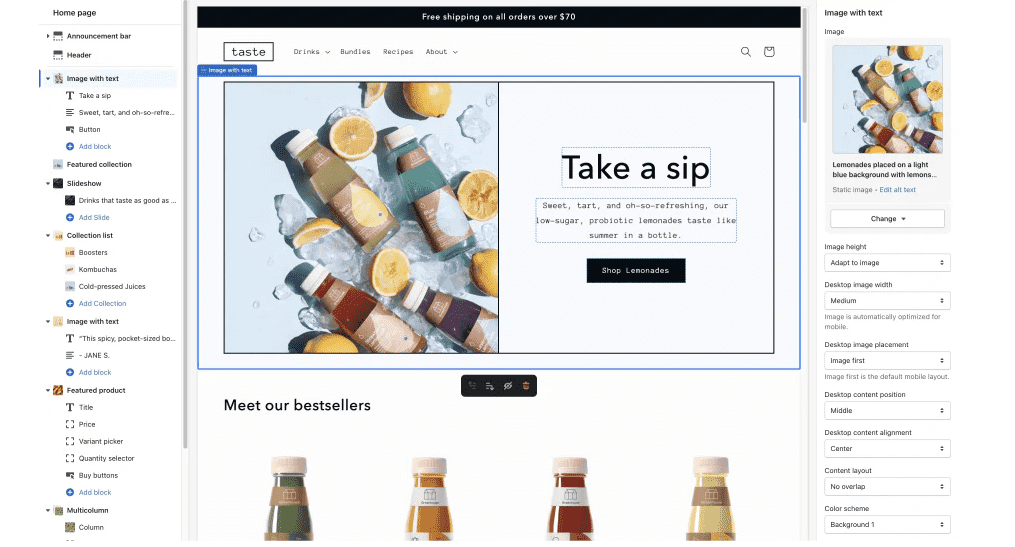
When it comes to building a page, Shopify utilizes a modern drag-and-drop editor. This tool offers more freedom, giving you tons of flexibility to lay out your text, images, and products.
Although it offers far more options than Big Cartel, the interface is well-designed, making it easy to pick up without a steep learning curve.
Design and Usability Winner
This category ends in a tie because the best choice depends on your needs.
Shopify wins on design and customization. Its powerful drag-and-drop editor and huge theme selection let you build a unique, professional store. Big Cartel wins on basic ease of use. Because it has fewer features, its dashboard is simpler, making it faster to get started if you only need a basic sales page.
4. App Market: Big Cartel vs Shopify
gran cartel offers a total of 46 integrations. These apps cover a wide range of basic business functions, including sales channels, marketing, Envío, and analytics, which are usually enough for fundamental requirements.
However, the selection is extremely thin; for example, the customer service category might only feature two types of apps, severely limiting your choices.
If you upgrade to a Platinum plan, you can generally download these 46 apps completely free of charge, and many offer a free plan.
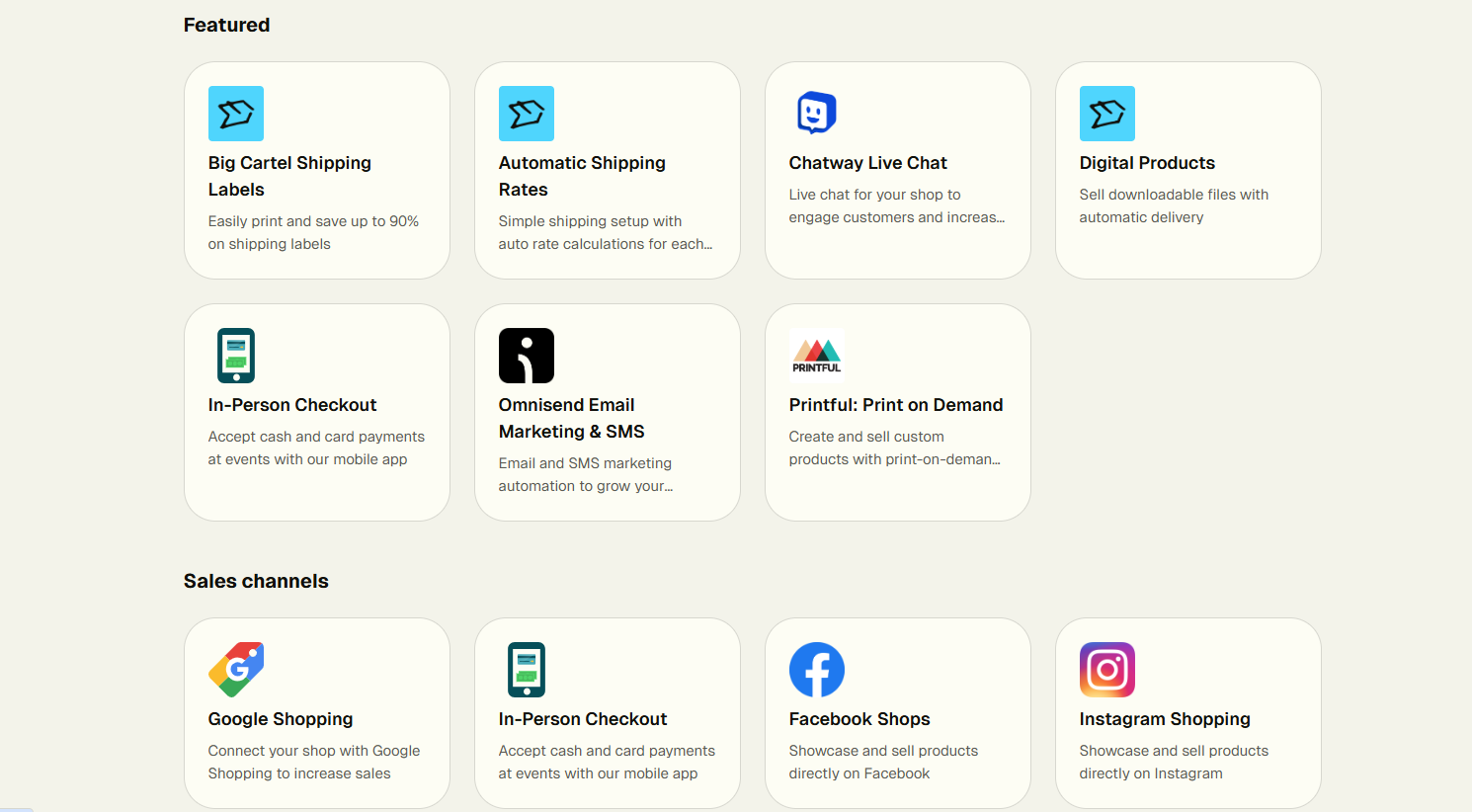
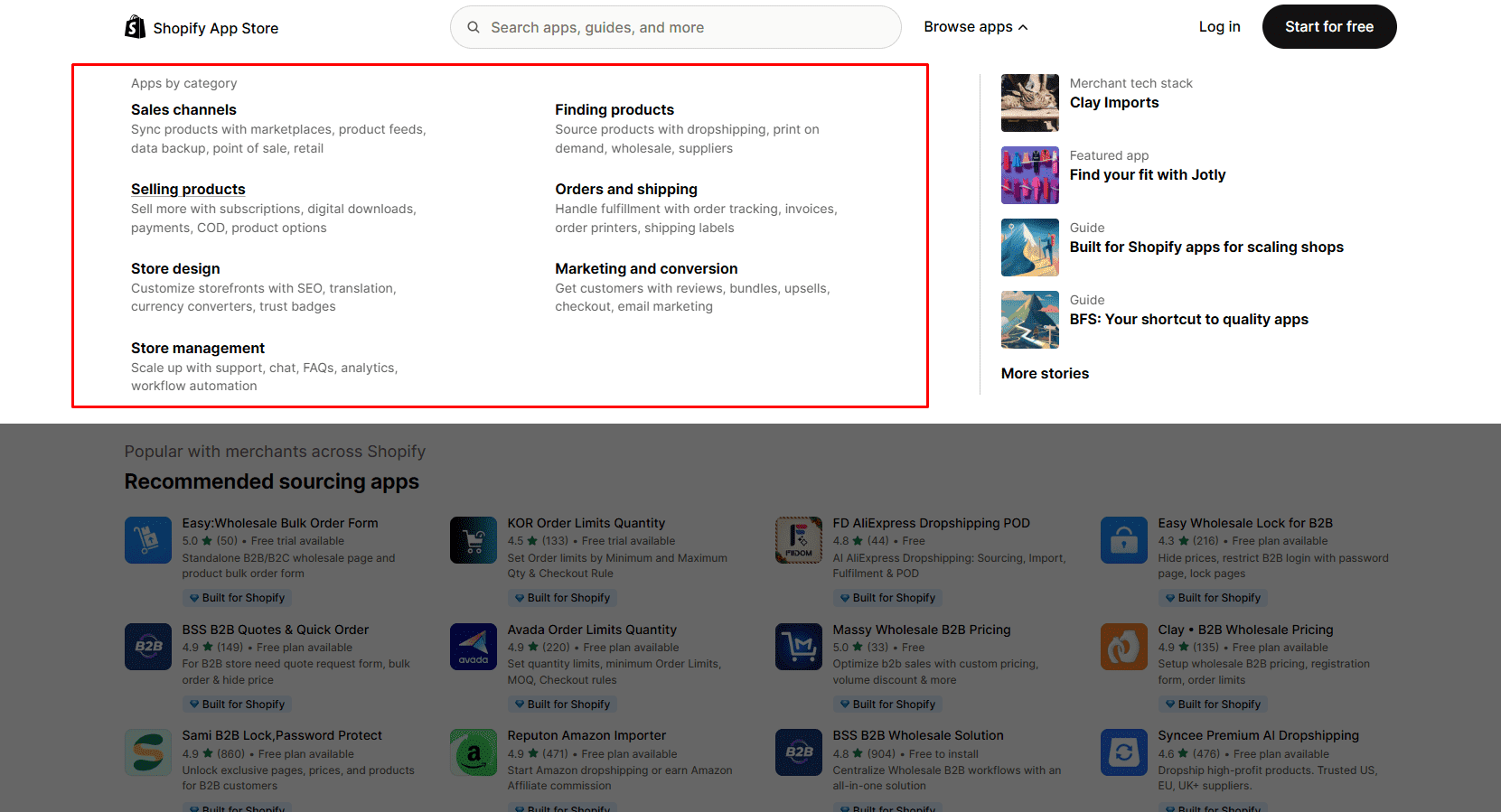
There are over 8,000 apps available on Shopify, covering virtually every aspect of running a modern business. Apps are free to install, but most require a subscription after a free trial.
While some apps maintain a permanent free tier, if you want the best features and highest performance, these tools often cost extra money, typically ranging from $50 to $150 per month.
App Market Winner
By numbers alone, Shopify is the undisputed winner of the Apps Market. Big Cartel, while limited, offers an advantage for the artist or niche seller: its small selection of apps keeps your costs low and manages to cover basic needs. If you intend to remain a small, low-volume store, Big Cartel’s strategy is financially efficient.
5. Marketing and SEO: Big Cartel vs Shopify
Making your store look amazing is only half the battle; the other half is getting people to actually visit it. This is done through marketing and search engine optimization (SEO), which helps your store rank high in Google search results.
Marketing tools
In terms of Marketing Tools, Shopify provides many powerful features built directly into your dashboard. You can run basic marketing por correo electrónico campaigns using Shopify Email and easily create and manage digital ads for major platforms. Shopify’s advanced ability to generate complex discount codes, bundle deals, and track loyalty programs is essential for driving repeat business.
gran cartel simply does not have this infrastructure built-in. If you want any kind of email marketing or campaign automation, you have to use third-party tools. There are no built-in email campaigns, no analytics dashboard for marketing, and no easy multi-channel selling.
Search Engine Optimization (SEO)
If organic traffic from Google is important, you need a platform that gives you technical control.
gran cartel does a few things Google likes: its sites are mobile-responsive, and the HTML is clean. However, it fails on key technical controls. For instance, Big Cartel gives you almost no control over URL structure and redirects. If you change a product URL, the old link doesn’t point to the new page; it sends visitors back to your homepage.
Also, a major oversight is the inability to easily edit meta descriptions—the text that shows up under your title in search results. Since meta descriptions influence who clicks on your link, this lack of control is a serious disadvantage when trying to compete.
Shopify gives you full and easy control over everything that matters. You can effortlessly customize URLs for both products and pages, and the platform handles redirects automatically, which prevents broken links. Adding and changing meta descriptions is simple and straightforward.
And Shopify’s blog functionality is built-in, providing a powerful platform for content marketing that Big Cartel simply cannot offer.
Marketing and SEO Winner
Shopify is the decisive winner in the marketing and SEO category. Shopify provides the powerful tools and technical control necessary to drive traffic and scale successfully, while Big Cartel is functional for basic SEO.
6. Dropshipping Capabilities: Big Cartel vs Shopify
Dropshipping is a popular business model where you sell products without ever holding inventory. When a customer places an order, a third-party supplier handles the storage and shipping directly to them. This system requires excellent platform integration with proveedores.
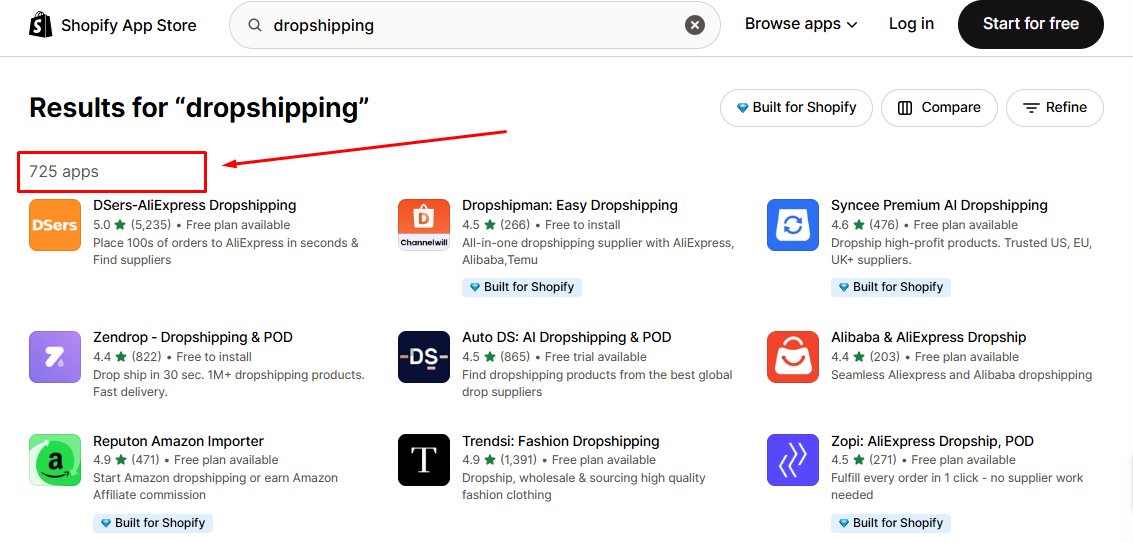
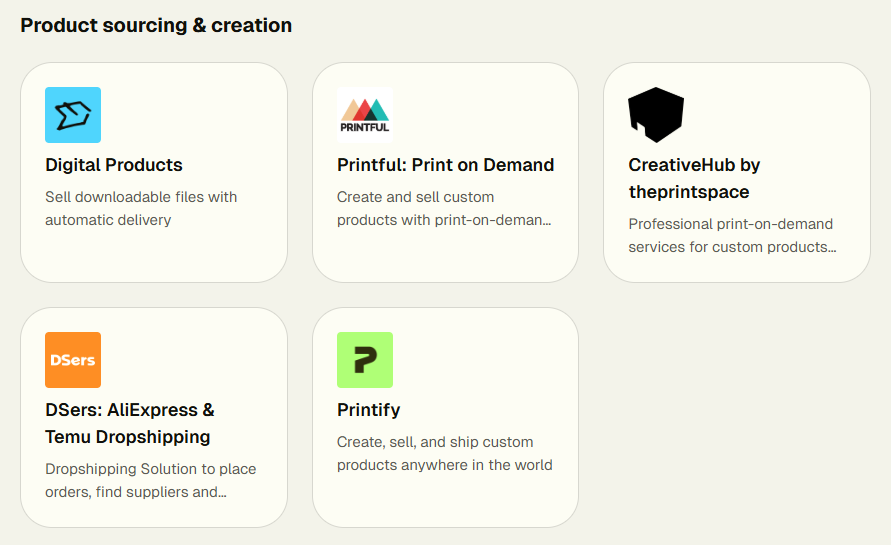
When you search for “dropshipping” in the Shopify App Market, you will find over 725 dedicated dropshipping apps, including major ones like DSers, Alibaba Dropship, Sup Dropshipping, and so on. These applications automate everything: importing products, syncing inventory, and sending order details directly to the supplier. This seamless automation is what makes Shopify the necessary platform for efficiently handling the high volume of orders common in successful dropshipping businesses.
Como para gran cartel, it offers only one dedicated app for importing products from AliExpress: DSers. Additionally, it integrates with various Print-on-Demand (POD) services like Printful.
However, beyond these few essential services, Big Cartel offers virtually no other dropshipping apps or integrations. While it manages these basic, niche functions well, its limited ecosystem severely restricts your ability to find and dropship a wide range of products efficiently.
Dropshipping Capabilities Winner
Shopify is the clear winner for dropshipping. While Big Cartel is a suitable option for artists focused exclusively on POD, its highly restricted integration library means it simply cannot support the volume or variety required by high-volume dropshipping businesses.
7. Support and Community: Big Cartel vs Shopify
The quality of cliente support and the size of the user community are critical for running an online business. When an issue strikes during a peak sales period, knowing you can get immediate help is essential.
Big Cartel Support
Big Cartel has improved its support and is now available 24/7. You can reach the team by using the in-app messaging feature or by sending an email. Both platforms offer a Help Center with guides and articles, but because Big Cartel is a simpler platform, its documentation is easier to navigate.
However, the primary limitation here is the communication channel: Big Cartel does not offer phone support or true real-time live chat. The in-app messaging system often works like an expedited email service. While the team is always available, getting an instant, real-time fix for a complex issue can still be difficult.

Shopify Support
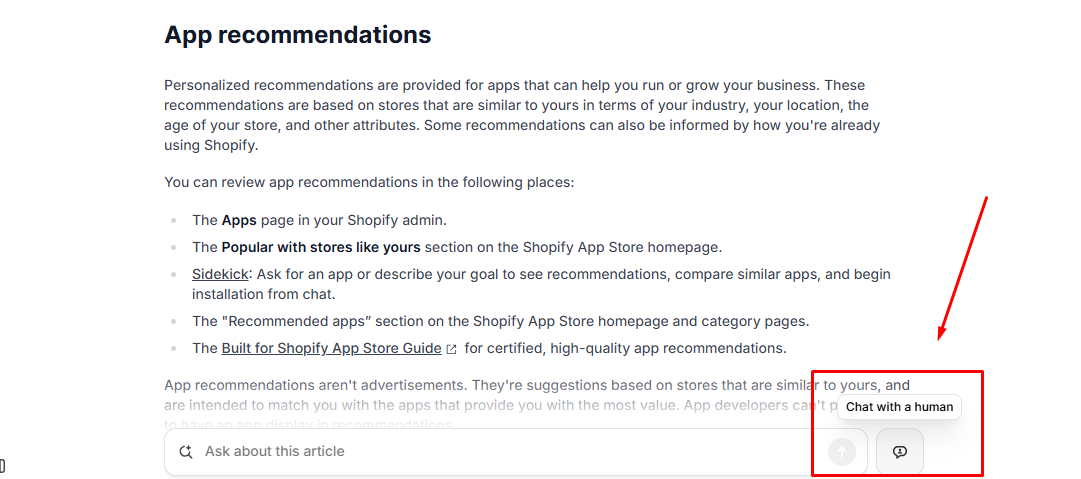
Like Big Cartel, Shopify also provides 24/7 customer support. However, Shopify offers instant channels like live chat and phone. For instance, the Plus membership, which is a highly expensive tier, includes priority 24/7 phone support.
There is one detail to note when seeking help: to speak to a live agent, users must often navigate the help center first. If the problem persists, users have the option to either consult the AI or proceed to chat with a real person.
Support and Community Winner
While both platforms offer 24/7 coverage, Shopify provides essential instant communication channels (live chat and phone for top tiers) that Big Cartel lacks.
Big Cartel vs Shopify Final Thoughts
The choice between Big Cartel and Shopify is simple: it depends on what kind of store you want to be.
Our review shows that Shopify is the winner for almost every powerful feature (like selling tools, apps, marketing, and customer help). If you want to build a brand that keeps growing and needs all the best tools, the higher cost of Shopify is worth it.
On the flip side, Big Cartel is the winner for saving money. It’s the perfect starting point for artists, creators, and people selling small numbers of items (low-volume sellers) who care most about having zero high fees.
Need Expert Guidance for Your Store?
If you are thinking about dropshipping, getting the right suppliers is super important. Sup Dropshipping is here to make this part easy. We help you find products, manage your inventory, and ship orders worldwide. We work smoothly with both Shopify and Big Cartel to make sure your fulfillment runs perfectly.
If you have any questions about ecommerce, Contáctenos today to learn how Sup Dropshipping can help your business run smoothly.
Sobre el Autor

Puede
May es bloguera de Sup Dropshipping con más de 5 años de experiencia en comercio electrónico. La pasión de May por el comercio electrónico la impulsa a mantenerse actualizada sobre las últimas tendencias y compartir su experiencia con usted a través de su blog. En su tiempo libre le gusta leer una novela o charlar con amigos.


Deja una respuesta