


How to Start Reselling on Amazon in 2026: A Complete Step-by-Step Guide
Have you ever found a product at a bargain price and thought, “I could resell this for a profit”?
In the ecommerce world, reselling on Amazon is the logical place to start. It generally commands higher selling prices than TikTok Shop and requires less marketing investment than building a standalone store on Shopify.
But look at the numbers: As of the third quarter of 2025, Amazon’s third-party seller services reached $42.4 billion. That means more and more entrepreneurs are jumping into this game.
The opportunity is huge, but so is the competition.
To succeed in this crowded market, you need to choose the right strategy from day one.
So, which business model actually fits your budget?
In this post, we will break down the four main business models (Retail Arbitrage, Online Arbitrage, Wholesale, and Dropshipping) to help you find your fit. Then, we will walk you through a complete 6-step guide to launching your store, from legal registration and product research to sourcing your first winning item.
Zanurzmy się.
What is Reselling on Amazon?
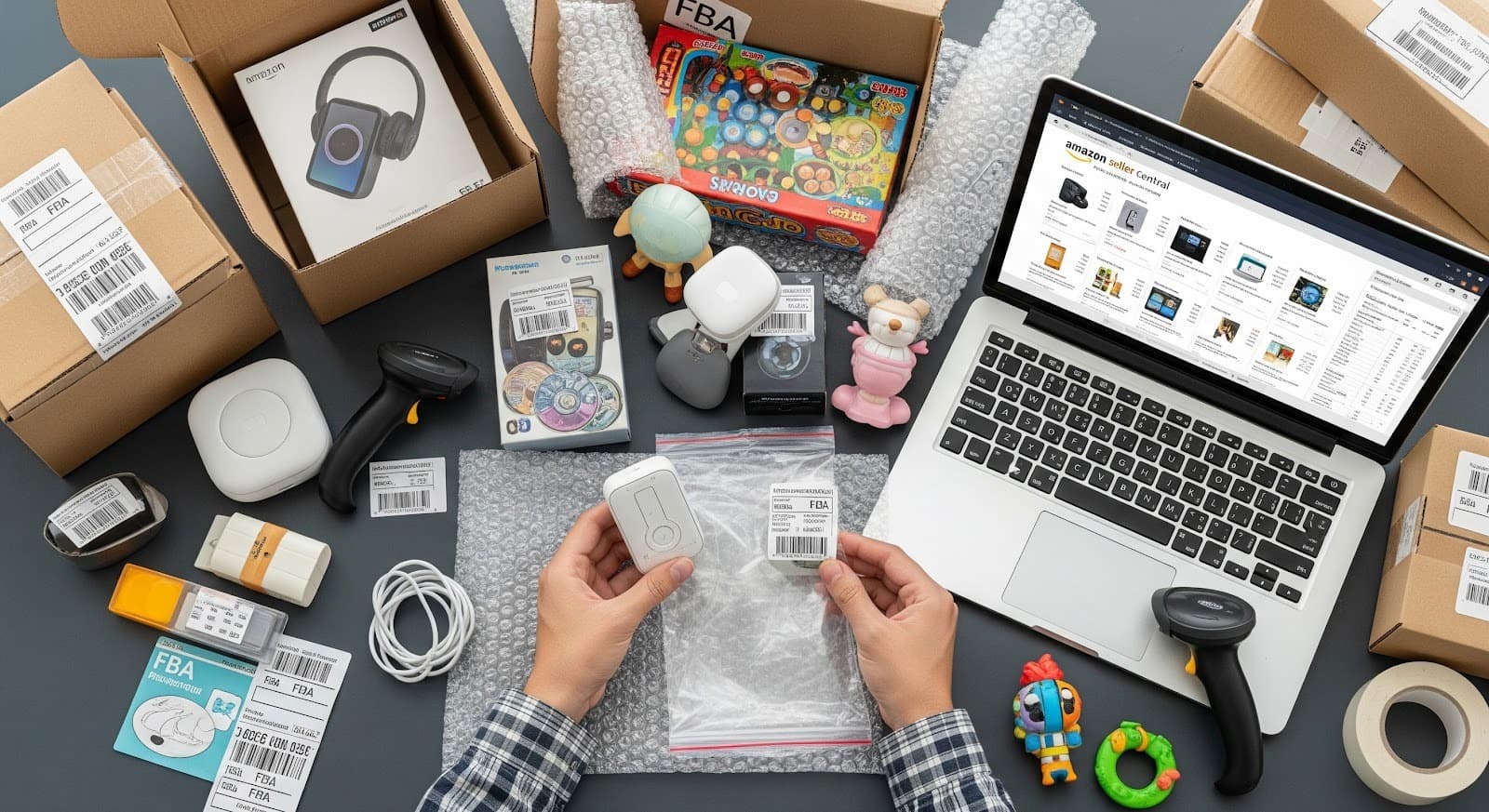
Reselling on Amazon is a business model where you purchase products—from wholesalers, retail stores, or websites—and sell them at a higher price to Amazon’s massive customer base.
With Amazon’s huge traffic, you don’t need to invent a new gadget from scratch. Instead, you are simply filling a gap in the market by supplying products people already want to buy.
Is it legal?
Yes. In the USA, the first sale doctrine gives you the right to resell anything you legally purchased. However, while it is legal, Amazon has strict rules about product condition, categories, and brand authenticity. Once you are ready to resell on Amazon, you must play by their rules.
Which Model Fits You to Sell on Amazon?
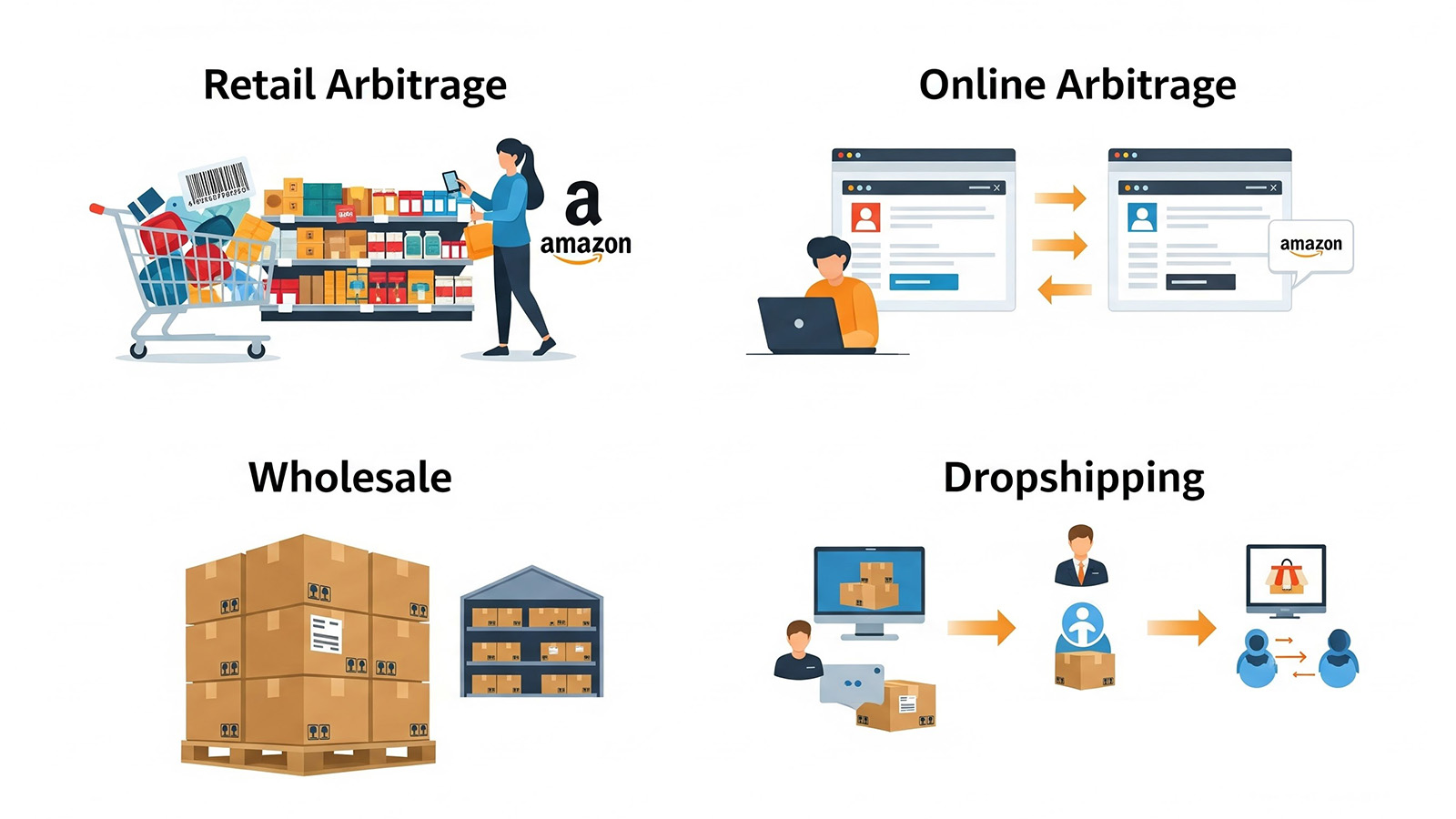
So, how do you actually get the products? There isn’t just one way to do this. The right method depends on your budget and whether you prefer scouring clearance aisles or negotiating with suppliers.
Most sellers fall into one of the four business models:
Retail Arbitrage
Retail arbitrage refers to buying products from the clearance sections of physical retail stores (like Walmart or Target) and reselling them for a profit on Amazon.
Amazon states it is possible to use this tactic if you follow their guidelines. The main challenge here is physical limitation. You are essentially trading time for money. If you aren’t physically scanning shelves at your local store, you aren’t finding inventory to sell. It is a great way to start, but hard to scale up.
Online Arbitrage
This is the exact same concept as retail arbitrage, but you do it from your computer. You search for price discrepancies on shopping websites like eBay or Walmart.com and flip those items on Amazon.
It is more scalable than driving to physical stores, but highly competitive. Automated tools and bots often snap up the best deals instantly.
Wholesale
This is where you buy in bulk directly from a brand or authorized distributor and sell the individual units to customers. Since you need to purchase large quantities in advance and store them, the upfront investment is significantly higher than arbitrage.
Unlike retail arbitrage, wholesale gives you a consistent, reliable supply chain where you can reorder products when you run out.
Dropshipping
Dropshipping means you list products on your store without holding inventory. After a customer buys an item, you send the order to your supplier, who ships it directly to the customer.
Since you don’t purchase the products until after the customer pays out, you have positive cash flow and zero risks of getting stuck with unsold inventory.
However, you should be careful. Amazon has a strict Drop Shipping Policy. You cannot buy products from another retailer (like Walmart or eBay) and have them ship to your customer if the packaging identifies the retailer. To do this safely, you must use a supplier that supports blind shipping to remove third-party branding.
How to Start Reselling on Amazon?
Reselling on Amazon isn’t difficult, but it does require following the right steps. Here is a guide to help you get your store up and running quickly.
Step 1: Create an Amazon seller account
First, go to Amazon Seller Central to register. Amazon offers two selling plans: the Individual Plan and the Professional Plan.
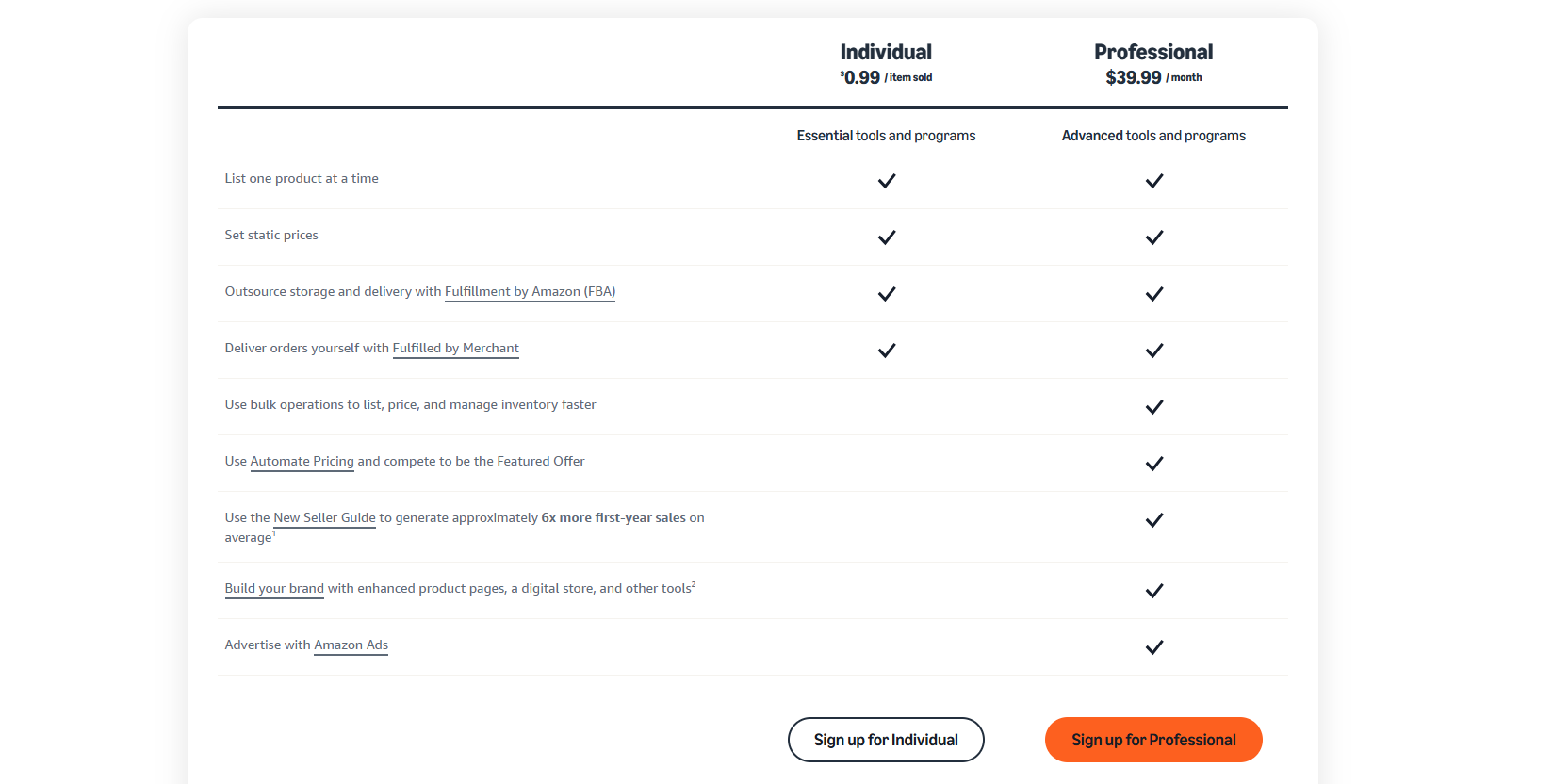
- Indywidualny: No monthly fee, but you pay $0.99 per item sold.
- Professional: $39.99 monthly subscription, with no per-item fee.
Which one should you choose?
- Individual plan covers the basic tools you need to list products and set static prices. It supports both FBA (Fulfillment by Amazon) and FBM (Fulfillment by Merchant). This plan is good for testing the waters if you aren’t sure what to sell yet, keeping your upfront costs low.
- Professional plan unlocks advanced features like bulk listing tools, automated pricing, Amazon Advertising, global selling, and API access. As long as you sell more than 40 items a month, the professional plan is cheaper than the Individual Plan.
Document Requirements:
Before you sign up, make sure you have the following ready. Requirements may vary by region, but typically include:
- For Individual Sellers: A government-issued ID (Passport or Driver’s License), a valid bank account, and a chargeable credit card.
- For Business Entities: In addition to the above, you will need your business registration documents and tax information.
Many beginners start with an Individual account to get familiar with the interface and upgrade to a professional account once they are ready to scale. You can switch plans at any time in your account settings, so don’t feel pressured to commit immediately if you aren’t ready.
Step 2: Product Research
This is a critical step. If you choose the wrong product, it is hard to make a profit. Don’t simply guess what will sell. It is better to analyze the data to verify if a product is actually a good business opportunity.
Regardless of where you find product ideas, whether it’s on TikTok Shop, eBay, or other platforms, you need to conduct deep research. And you can focus on these four key areas:
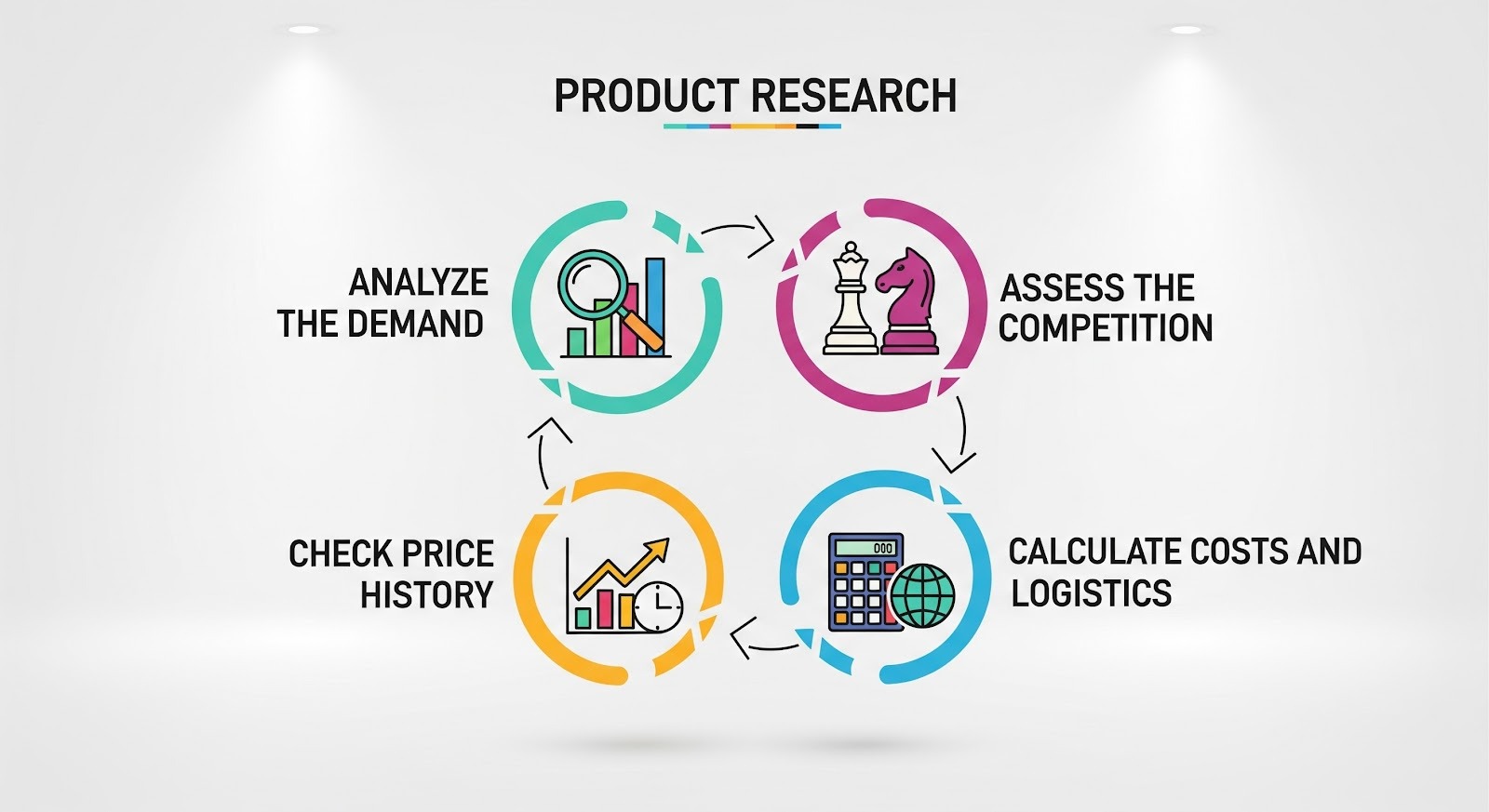
1. Analyze the Demand
First, check if there are enough potential customers. Think about who the product is for. Is it a niche item for a specific group or a general item? Defining your consumer persona serves two main purposes:
- Purchasing Power: It helps you verify if your target customers actually have the budget to afford your product.
- Future Marketing: A clear audience definition is the foundation for your future promotional campaigns. You will know exactly where to reach them and what message to send.
2. Assess the Competition
Don’t just look at the product; look at the other sellers.
- Number of Sellers: If a listing has too many sellers, the price will likely drop due to intense competition. It is often better to find listings with fewer sellers.
- Ad Spend vs Sales Volume: Compare the advertising intensity with the category’s sales volume. If competitors are spending heavily on ads but the total sales volume is only average, it means the market is saturated and expensive to enter. You want to see high sales volume relative to the ad competition.
- Is Amazon Selling? If Amazon itself is selling the product, try to avoid it. They can usually lower the price further than you can.
3. Calculate Costs and Logistics
Your profit is not just the difference between the selling price and your buy cost. Remember to account for shipping and fees.
- Size and Weight: This is a major cost factor. Larger and heavier items cost much more to ship and store in Amazon’s warehouse. As a beginner, starting with small, light items helps keep fees low.
- Total Margin: Compare the Amazon selling price with your sourcing cost. Ensure there is enough margin to cover Amazon fees, shipping, and your potential ad spend.
4. Check Price History
The current price you see on Amazon might not be the normal price. It is smart to use a tool to check the product’s price history over the last 3 to 6 months. Make sure the price is stable and hasn’t just spiked up temporarily. You want a product with a consistent selling price.
To ensure profitability, spend time finding zwycięskie produkty that have high demand but manageable competition.
Step 3: Sourcing
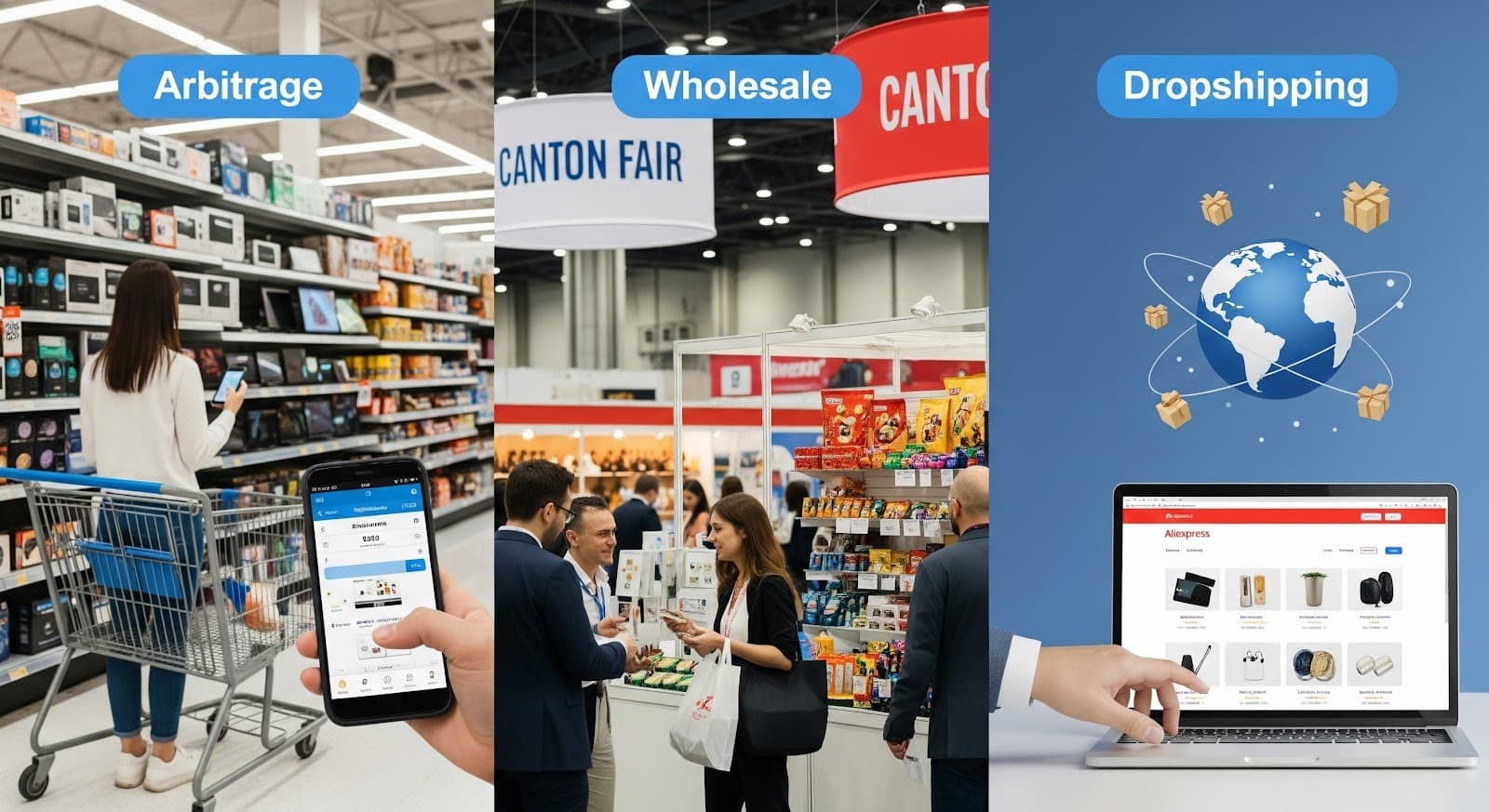
Once you have identified a winning product, you need to find a supplier. Depending on the business model you chose, your sourcing channels will differ:
- For Arbitrage: Your suppliers are retailers like Walmart, Target, or clearance websites. Your job is to physically or digitally find discounted inventory.
- For Wholesale: You will look for distributors or manufacturers. You can find them through trade shows (like the Canton Fair), industry directories, or platforms like Alibaba and 1688.
- For Dropshipping: You need to find suppliers that specifically support dropshipping workflows, like Aliexpress or a professional dropshipping agent.
The All-in-One Solution: Sup Dropshipping
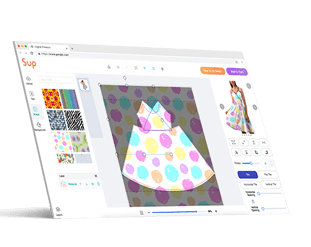
If you want to access the best prices from China without the headache of language barriers or minimum order quantities (MOQ), Sup Dropshipping is your bridge. Sup connects you directly to over 40+ marketplaces (including 1688, Taobao, and JD) and allows you to source flexibly based on your model:
- For Dropshippers: You can use AI Sourcing to find the best price and enjoy automatic fulfillment with no inventory investment.
- For Wholesalers: You can buy in bulk. Sup acts as your personal agent to handle purchasing, quality checking, and global shipping.
Regardless of the channel you choose, before you commit to selling, it is essential to order a sample to verify the quality. And make sure to calculate the total costs to ensure you still have a healthy profit margin.
Step 4: List Products
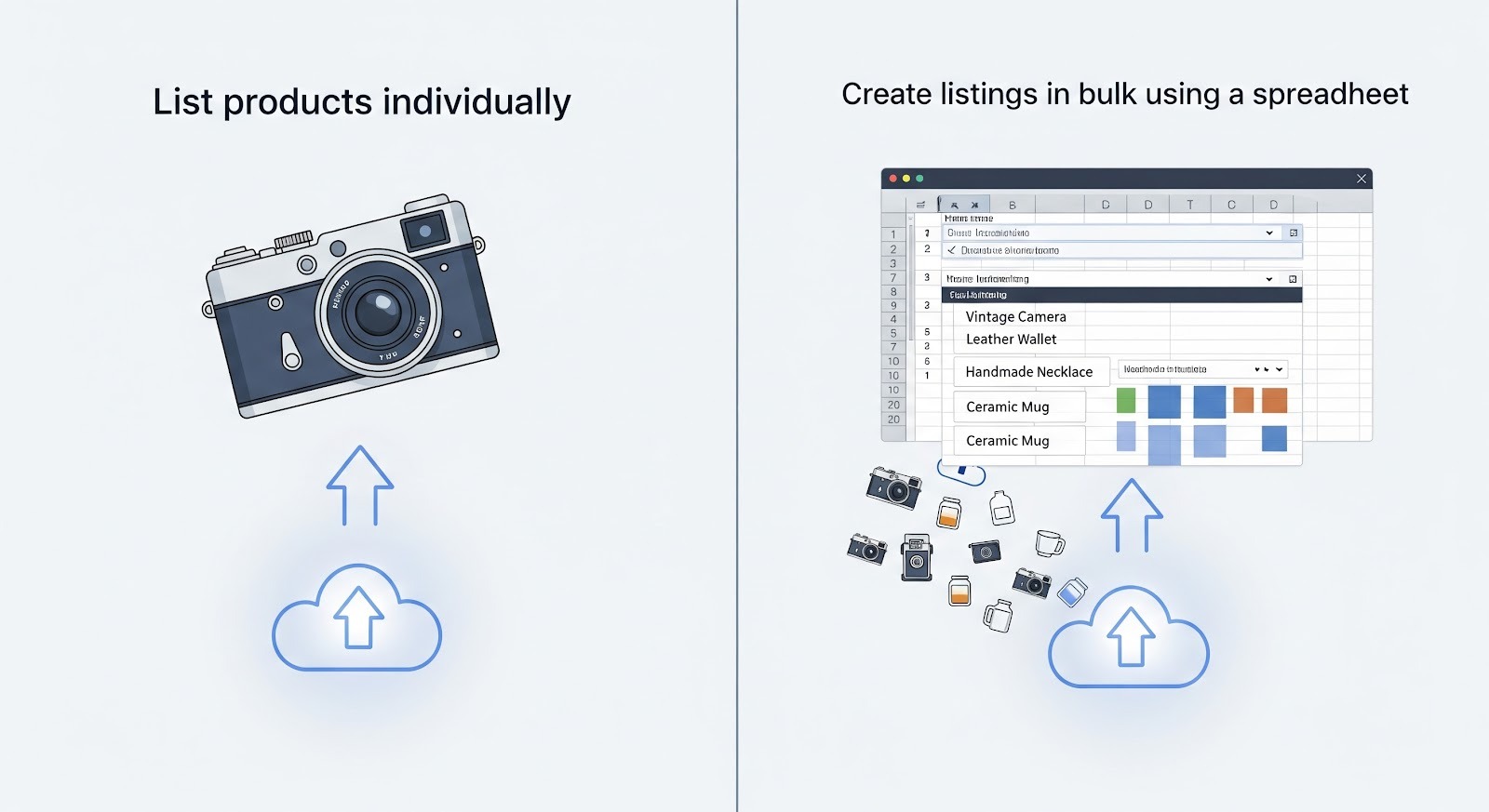
Listing on Amazon works differently depending on the product type. For branded products, only the authorized resellers can create or match offers on these product detail pages. If a product is generic and has no permanent brand name or logo, you may need to create a new detail page yourself.
Technically, there are two ways to upload these items. You can list products individually. Alternatively, if you have a large inventory, you can create listings in bulk using a spreadsheet.
Once you list the item, you should determine the price. Consider your sourcing costs, Amazon fees, and competitor pricing. If you are unsure how to calculate the perfect number to maximize your profit, check out our full guide on Jak ustalić cenę produktu.
Step 5: Select fulfillment method
Amazon oferuje 2 opcje dostarczania produktów klientom:
- Fulfilled by Merchant (FBM). With this choice, you oversee your product inventory, manage packaging, and personally handle the shipping to customers.
- Fulfillment by Amazon (FBA). With this approach, you send your product inventory to Amazon, and they handle the storage, packing, and shipment of the products to your customers.
Step 6: Manage and Grow Your Business
Once your products are live, the real work begins. You cannot simply list items and forget about them. You need to actively monitor your daily sales and keep an eye on your inventory levels to ensure you don’t run out of stock on popular items.
Reselling on Amazon FAQs
1. Does reselling on Amazon actually work?
Yes, absolutely. Reselling is a proven business model on Amazon. Whether you choose arbitrage, wholesale, or dropshipping, it works effectively as long as you strictly follow Amazon’s selling policies and guidelines.
2. How much does it cost to sell on Amazon?
Amazon offers two selling plans: the Individual plan costs $0.99 per item sold, and the Professional plan costs $39.99 per month. In addition to these plan fees, you will pay a referral fee for every item sold. Also, if you choose to use FBA, you need to account for extra fulfillment and storage fees.
3. Can I make $1000 a month selling on Amazon?
Yes, it is possible, but it certainly won’t happen overnight. Success on Amazon requires consistent effort. You need to consistently research new products, replenish your inventory, and manage your store.
Selling on Amazon: Final Thoughts
Reselling on Amazon is one of the most accessible paths to building a sustainable online business. You don’t need to invent a new product. You simply need to find what customers already want and deliver it to them.
From choosing the right business model to researching products and sourcing them reliably, you now have the roadmap to start your Amazon reselling journey.
If you have any questions, feel free to comment below or Skontaktuj się z nami directly.
o autorze

Móc
May jest blogerką w Sup Dropshipping z ponad 5-letnim doświadczeniem w eCommerce. Pasja May do handlu elektronicznego sprawia, że jest na bieżąco z najnowszymi trendami i dzieli się z Tobą swoją wiedzą za pośrednictwem swojego bloga. W wolnym czasie lubi czytać powieści lub rozmawiać z przyjaciółmi.
Dodaj komentarz